HR Tech
The Ultimate Guide to HR Applicant Tracking Systems
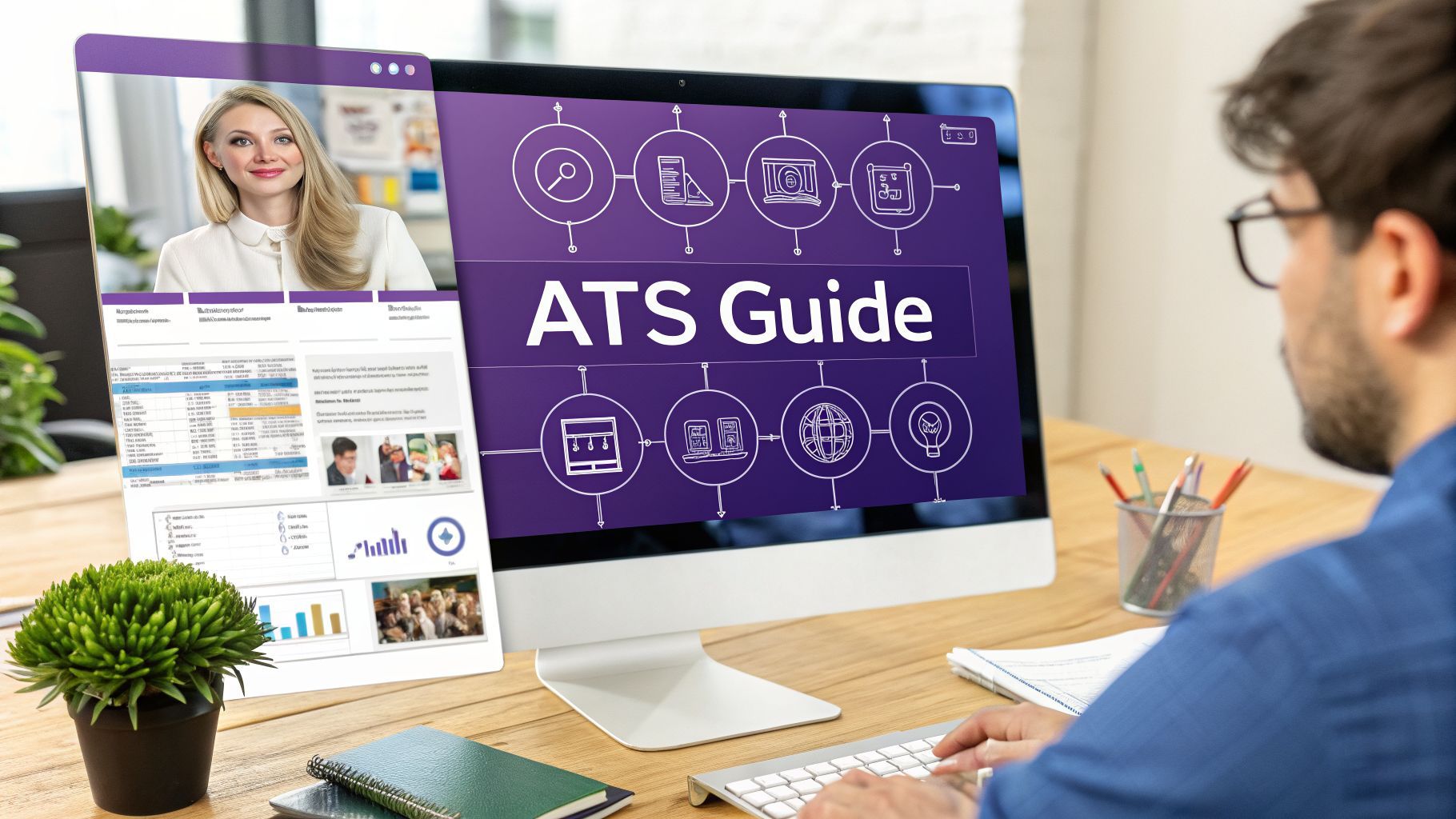
An HR applicant tracking system is software that organises your entire recruitment process, from posting a job to making a hire. Think of it as your central hub for all things hiring, replacing the chaos of tracking everything in spreadsheets and email threads.
What an HR Applicant Tracking System Does
Picture your hiring process as a busy professional kitchen at peak service. Applications fly in like orders from all directions, communication is all over the place, and your best dishes—the top candidates—are at risk of getting lost in the confusion. An HR applicant tracking system (ATS) is like the head chef, bringing calm, order, and efficiency to the whole operation.
It’s a specialised software platform built to solve the biggest headaches of manual recruiting. Instead of wrestling with lost CVs, endless spreadsheets, and slow communication that leaves candidates frustrated, an ATS gives you a single, central place to manage everything. It automates key steps in the hiring journey, from the moment you post a job advert to welcoming your new team member.
From Manual Chaos to Automated Order
Without an ATS, HR teams and hiring managers often feel like they’re drowning in admin. This manual approach doesn’t just eat up valuable time; it also creates a poor experience for applicants left waiting for an update. Moving to an ATS is a huge step up—shifting from reactive, disorganised hiring to a proactive, structured workflow.
An ATS transforms hiring from a time-consuming administrative burden into a streamlined, strategic function. This makes it an essential tool for any business aiming to hire top talent effectively.
We can see just how essential they've become across the UK. Today, an HR applicant tracking system is a cornerstone of modern recruitment, with around 70% of large organisations already using one. For small and medium-sized businesses (SMBs), adoption is at 20% and climbing, showing a clear and growing recognition of their value for in-house HR teams.
To give you a clearer picture, here’s a quick comparison of the old way versus the new way.
Manual Recruiting vs ATS-Powered Recruiting
| Hiring Task | Manual Process (Without ATS) | Automated Process (With ATS) |
|---|---|---|
| Posting Jobs | Manually posting to each job board, one by one. | Post to multiple job boards and social media with one click. |
| Screening CVs | Reading every single CV, regardless of relevance. | Automatically screens and shortlists candidates based on your criteria. |
| Candidate Communication | Sending individual emails for updates, interviews, and rejections. | Sends automated, personalised email updates at each stage. |
| Team Collaboration | Forwarding emails and sharing spreadsheet notes. | Centralised notes, ratings, and feedback for the whole hiring team. |
| Reporting | Manually tracking metrics like time-to-hire in spreadsheets. | Generates instant reports on key hiring metrics. |
This shift towards automation is what allows businesses to manage high volumes of applications without sacrificing quality or the candidate experience. It’s no longer a tool just for massive corporations; an ATS is now a vital asset for any organisation serious about building a great team.
For any company looking to stay competitive, understanding what an ATS does is the first step. You can learn more about how to transform your hiring process in our related article.
The Core Features That Define a Modern ATS
While every hr applicant tracking system promises to simplify hiring, the ones that truly make a difference share a handful of core features. These aren't just separate bells and whistles; they’re interconnected tools that transform recruitment from a manual chore into a genuine strategic advantage. It's the difference between a basic digital filing cabinet and a smart, automated hiring co-pilot.
At its heart, a modern ATS is designed to bring a sense of calm and order to the natural chaos of recruiting. This diagram paints a clear picture of that transition, swapping the tangled mess of manual admin for clean, automated efficiency.

Moving from scattered paperwork to a single, organised workflow is the fundamental value an ATS brings to the table. It gives HR teams the clarity and control they need to manage the entire hiring journey. Let’s break down the key features that make this happen.
Multi-Channel Job Posting and Sourcing
The first hurdle in any recruitment drive is getting your role in front of the right people. A good ATS acts as a powerful megaphone, letting you post a job vacancy to dozens of platforms at once. With just one click, your role can appear on major job boards like Indeed and LinkedIn, niche industry sites, and your company’s own social media channels.
This isn't just a time-saver. It’s about casting a wider, more strategic net to attract a diverse and qualified pool of talent right from the start. By centralising your job distribution, you also ensure your branding and message are consistent everywhere your role is seen.
Intelligent CV Parsing and Candidate Matching
Once the applications start flooding in, the real work begins. This is where a modern ATS proves its worth. Instead of your team having to read through hundreds of CVs one by one, the system uses CV parsing to automatically pull out and categorise key information like skills, work history, and qualifications.
It then takes this a step further with smart candidate matching. Think of it as your personal recruitment assistant, working behind the scenes. The software intelligently compares the data from all the CVs against your specific job requirements, instantly creating a ranked shortlist of the most relevant people. This feature alone can cut screening time down from hours to minutes.
The goal of smart matching isn't to replace human judgment but to augment it. It filters out the noise, allowing your hiring team to focus their valuable time and expertise on the most promising individuals.
Centralised Communication and Collaboration
Good communication is the backbone of both a positive candidate experience and an efficient internal team. An ATS creates a central hub for every single interaction tied to a vacancy. Every email, internal note, and piece of feedback is stored neatly in the candidate’s profile, where the whole hiring team can see it.
This establishes a single source of truth, finally putting an end to confusing email chains and scattered comments in spreadsheets. Key functions usually include:
- Automated Email Templates: Send instant acknowledgements, interview invitations, or rejection notices that are still personalised and, most importantly, timely.
- Team Scorecards and Notes: Collaboratively rate candidates and share structured feedback, making sure everyone is aligned.
- Complete Communication History: Look back at every touchpoint with a candidate, giving you a full picture of their journey with your company.
Integrated Scheduling and Video Interviews
Trying to coordinate interview times across multiple calendars can quickly become a logistical nightmare. A modern ATS often syncs directly with calendars like Outlook or Google Calendar, which allows candidates to book their own interview slot based on the hiring manager’s live availability.
On top of that, many platforms, including SeeMeHired, now come with built-in video interviewing tools. This means you can conduct initial screening calls or formal interviews directly within the ATS, keeping everything organised in one place and dramatically speeding up the evaluation process. This is particularly vital in fast-moving sectors like hospitality and retail, where a quick response time is everything. You can learn more by checking out our guide on how to automate HR with our top features.
UK recruitment data really hammers home how vital these tools are. Statistics from Jobseeker.com show that 76.3% of recruiters use an ATS to filter CVs, mainly focusing on experience and skills. For businesses in fast-paced sectors, integrated communication and video interviews are non-negotiable, as almost 69% of applicants admit to rejecting offers simply because the hiring process took too long.
Key Benefits of an HR Applicant Tracking System
Beyond just tidying up your recruitment process, a modern hr applicant tracking system brings about real, measurable changes that genuinely lift the business. We're not just talking about what the software does, but what it helps you achieve—for your team, your candidates, and your bottom line. It's about turning recruitment from a costly admin headache into a strategic asset.
The positive effects are felt right across the company, from winning back precious time to building a much stronger employer brand. For stretched in-house HR teams, particularly in high-volume sectors like healthcare and hospitality, these aren't just nice-to-haves; they're essential for keeping up and getting ahead.

Let's break down the biggest wins you can expect when you bring the right system on board.
Drastically Reduce Your Time-to-Hire
In a tight job market, speed is your secret weapon. The best people are often snapped up within days, not weeks. An ATS gives you the agility to find and secure top talent before your competitors even have a chance.
By automating all those repetitive jobs—posting to job boards, sifting through CVs, scheduling interviews—the system frees your team from hours of mind-numbing admin. Tasks that used to eat up an entire afternoon can now be done in minutes.
This newfound speed means your recruiters can stop chasing paperwork and start focusing on what they do best: building relationships with promising candidates and making sharp, well-informed hiring decisions. As a result, your entire hiring timeline, from the first ad to the final offer, gets a serious trim.
Improve the Quality of Your Hires
Moving faster doesn't mean cutting corners on quality. In fact, a good hr applicant tracking system actively helps you make better, more strategic hiring choices.
By applying consistent screening criteria and smart matching, the software ensures you're fairly assessing every applicant against the skills that actually matter for the role. This data-first approach helps strip away unconscious bias, allowing you to spot high-potential candidates who might have slipped through the cracks in a manual pile of CVs.
An ATS provides the structure and data needed to move beyond gut feelings. It empowers your team to consistently identify and hire individuals who not only fit the job description but also align with your company culture, leading to better long-term retention.
This jump in hire quality directly boosts team performance and saves you from the enormous cost of getting it wrong.
Strengthen Your Employer Brand
Think about it: every single touchpoint a candidate has with your company shapes their opinion of you as an employer. A clunky, disorganised, or silent hiring process screams one thing: "We don't value your time."
An ATS helps you deliver a polished, professional, and positive candidate experience from the moment they apply. This is where it really makes a difference:
- Instant Acknowledgements: No more radio silence. Candidates get an immediate confirmation that their application has landed safely.
- Timely Status Updates: Automated emails keep applicants in the loop on where they stand, so they’re never left guessing.
- Seamless Scheduling: Simple, self-service interview booking shows you respect their schedule as much as your own.
This level of professionalism doesn't just keep your top candidates engaged; it builds an excellent reputation in the job market. Even people you don't hire walk away with a good impression, which is fantastic for your long-term talent pool. For more on this, check out our guide covering the key benefits of an ATS for smarter hiring.
Ensure Effortless Compliance
For any UK business, staying on the right side of data protection laws like GDPR is a massive headache. Trying to manually track candidate data, consent, and retention policies is not only exhausting but also incredibly risky.
An ATS takes on the role of your compliance watchdog, automating these critical but tedious tasks. It acts as a secure, central hub for all candidate information. Better yet, it can automatically handle data retention rules and provide a clear audit trail for every single applicant—an absolute must-have in regulated sectors like healthcare. This built-in security and automation drastically cut your risk of facing hefty fines or reputational damage.
How to Choose the Right ATS for Your Business
Picking the right hr applicant tracking system is a huge decision, and for good reason. This is the platform that will become the engine of your entire recruitment operation. Get it right, and you gain a powerful partner for growth. Get it wrong, and you're stuck with endless frustration and wasted resources.
The trick is to look past the flashy features and really focus on what your business needs to hire better people, faster.
Think of it like choosing a new company car. You wouldn't buy a two-seater sports car if you need to drive a large team around, nor would you get a massive lorry if you’re just navigating tight city streets. The perfect choice is all about your specific needs, your team's size, and where you're headed. Your ATS selection should be just as practical.
The impact of making the right call is massive. Research shows that by 2026, an expected 70% of large organisations and 20% of SMEs in the UK will be using an ATS. The results speak for themselves: these businesses see an average 40% drop in their time-to-hire and their recruiters save around 4.5 hours every week. You can read the full research on how ATS impacts UK recruitment to see more of these efficiency gains.
Define Your Core Needs and Priorities
Before you even start looking at vendors, the first step is to look inwards. What are the biggest headaches in your current hiring process? Are you struggling to attract enough candidates, drowning in manual CV screening, or constantly battling with interview scheduling?
Jot down your top three to five recruitment challenges. This list becomes your compass. It will point you towards a system that solves your actual problems, not just one with the longest feature list. If your main issue is a lack of quality applicants, for instance, a system with strong job board distribution and employer branding tools should be at the top of your list.
Evaluate Key Vendor Capabilities
Once you have a clear picture of what you need, you can start sizing up potential vendors. It's vital to ask the right questions to figure out if a platform is a good long-term fit. Here are the most important areas to dig into:
- Scalability: Can the system grow with you? You need to know if it can handle more job roles, users, and applicants down the line without a huge price jump or a drop in performance. A good ATS should support your business today and five years from now.
- User-Friendliness: How easy is it for your team to actually use? A powerful system is useless if your hiring managers find it too complicated. Always ask for a live demo and insist on seeing the exact interface your team will be using every day.
- Integration Potential: Does it play well with other tools? Your hr applicant tracking system has to connect smoothly with the software you already use, like your company calendars, HRIS, and payroll systems. This is what stops you from creating data silos and doing double the work.
For most in-house HR teams, an all-in-one solution like SeeMeHired is often the best choice. Instead of juggling multiple, disconnected tools for sourcing, interviewing, and onboarding, a unified platform brings everything under one roof, creating a truly seamless workflow.
Use a Checklist for a Structured Comparison
Comparing multiple vendors can feel overwhelming. A simple checklist is the best way to stay objective and focused on what really matters to your business. You can use it to score each potential ATS against the needs you've already defined.
To make it even easier, we've put together a quick checklist to help guide your HR team's evaluation.
ATS Evaluation Checklist for Your HR Team
| Evaluation Criteria | Key Questions to Ask | Ideal Answer for SMEs |
|---|---|---|
| Ease of Use | How long does it take to train a new user? Can our hiring managers use it with minimal guidance? | Intuitive interface, minimal training required, positive user reviews. |
| Core Functionality | Does it automate our biggest time-wasters (e.g., job posting, screening, scheduling)? | Robust automation for key tasks, all within a single platform. |
| Customer Support | What kind of support is offered? Is it UK-based? Are they responsive? | Dedicated, accessible support with a strong understanding of the UK market. |
| Cost & ROI | Is the pricing transparent and predictable? Does it fit our budget? | Clear, scalable pricing with no hidden fees and a demonstrable return on investment. |
Using a framework like this helps you cut through the noise, confidently compare your options, and pick the system that truly aligns with your goals.
If you're looking for more in-depth comparisons, our article on the 10 best applicant tracking systems in 2025 provides extra insights to help your search. Making an informed choice now is an investment that will pay off for years to come.
Ensuring Compliance and Security with Your ATS
Handling candidate data isn't just about good admin anymore—it's a massive legal minefield. One wrong move with personal information can land your business with eye-watering fines and a reputation that’s hard to repair. This is where a modern hr applicant tracking system stops being a simple productivity tool and becomes your most important line of defence.
Forget thinking of it as just software. The right ATS is like having a compliance expert built directly into your recruitment workflow. It takes the high-stakes, high-stress tasks like tracking data retention dates and proving you have consent, and just… handles them. Automatically. It makes sure every piece of candidate data is collected, stored, and eventually deleted, all by the book.
Navigating GDPR and Data Protection
If you’re hiring in the UK, the General Data Protection Regulation (GDPR) isn’t something you can just skim over. The rules are strict and non-negotiable. You have to get explicit consent, you can’t hold data forever, and you must respect a candidate’s "right to be forgotten". Trying to juggle all of that with spreadsheets and a messy inbox is asking for trouble.
A good ATS takes that potential chaos and turns it into a clear, automated process.
- Automated Consent Management: The system asks for consent right at the application stage, creating a perfect, time-stamped paper trail for every single candidate.
- Data Retention Policies: You simply set the rules—for example, automatically delete all data from unsuccessful applicants after 12 months. The system does the rest, ensuring you’re not illegally holding onto old information.
- Secure Data Access: All candidate data is kept in one secure, central hub. With role-based permissions, you control exactly who sees what, so sensitive details are only visible to authorised staff.
This isn’t just about ticking boxes to avoid fines. When candidates see you’re serious about protecting their privacy, you build trust from the moment they click ‘apply’.
Compliance in Highly Regulated Sectors
For those in industries with even stricter rules, like UK healthcare, the compliance challenge gets dialled up a notch. It’s not just GDPR; you also have to satisfy bodies like the Care Quality Commission (CQC), which demands meticulous background checks and flawless record-keeping to guarantee patient safety.
An hr applicant tracking system built for regulated industries is your digital, audit-ready filing cabinet. It gives you the structured document storage and real-time tracking you need to prove you’re compliant at a moment’s notice.
Imagine a healthcare provider using a platform like SeeMeHired. They can build custom compliance checklists right inside the system. For every applicant, they can track the status of critical documents—DBS checks, professional registrations, and right-to-work evidence. It’s all stored securely against the candidate’s profile, creating an audit trail that’s easy to search.
This isn’t a nice-to-have feature; it’s a core risk management function. Being able to pull a report that proves every single new hire is fully compliant can be the difference between passing an inspection and facing serious regulatory action. The right ATS makes your hiring process not just efficient, but completely defensible.
Successfully Implementing Your New ATS
Flicking the switch on a new hr applicant tracking system is the easy part. The real challenge? Getting your team to actually use it, and use it well. A successful launch isn't about the software; it’s about smart change management, clear communication, and proving from day one that this new tool makes everyone's job easier.
Let's be honest, the biggest hurdle isn't the tech itself—it's people. Your recruiters and hiring managers are comfortable with their current routines, even the clunky, time-wasting ones. The secret to winning them over is to show them, repeatedly, what’s in it for them.

This goes way beyond sending a memo announcing a new system. You have to build a rock-solid case for why this change improves their daily work. Focus on tangible wins, like slashing admin time, speeding up the hiring process, and making teamwork feel effortless.
Leading the Change Effectively
To get your team excited, you first need to get your key stakeholders on board. Hiring managers are your most important audience; their attitude will shape how the rest of the organisation reacts. Don’t frame the ATS as just another piece of software they need to learn. Position it as the answer to their biggest hiring headaches.
Before you even think about going live, map out a clear plan with these key steps:
- Communicate the 'Why': Don't just tell them what's happening; explain why it's happening. In your kickoff meetings, use real-world scenarios. For example, "Remember that last role where you had to sift through 200 CVs? This system will give you the top 10, automatically."
- Provide Role-Specific Training: Generic, one-size-fits-all training sessions are a waste of time. Show recruiters how they can post to multiple job boards with a single click. Show hiring managers exactly how to review a shortlist and leave feedback in under five minutes. Keep it relevant to their day.
- Establish a Go-To Expert: Choose an internal champion—a "super-user" or a small team—who can be the first port of call for any questions. This creates an internal support system that builds confidence and solves small problems before they become big ones.
When you focus on the practical benefits, you're not just issuing a directive. You're creating a shared mission to hire better and faster.
Managing Data Migration and Workflows
One of the biggest practical hurdles is moving all your candidate data. Shifting years of information from spreadsheets, chaotic email inboxes, and old systems into your shiny new hr applicant tracking system can feel like a mammoth task. Lean on your ATS provider here—most have teams dedicated to making this as painless as possible.
Think of data migration as a chance for a fresh start. This is your moment to cleanse your candidate database, getting rid of duplicate profiles and out-of-date information. A clean start means your new system's search and matching tools will work brilliantly from day one.
Once you’re up and running, the focus shifts to creating simple, repeatable workflows. Document the new process for everything from creating a job requisition to making an offer. Clear, step-by-step guides prevent confusion and make sure everyone uses the platform consistently. This is absolutely crucial for gathering reliable data and proving the system's value.
For a deeper dive into the practicalities, check out our guide on how to switch to a new ATS in 5 easy steps.
Frequently Asked Questions About HR Applicant Tracking Systems
Any time you bring a new piece of technology into your business, it’s natural to have questions. When it comes to something as central as an hr applicant tracking system, you’ll want to know about everything from cost and complexity to its real-world impact on hiring.
We get it. So, let's tackle some of the most common questions we hear from businesses thinking about getting an ATS. We’ll cut through the myths and give you the practical answers you need.
Will an ATS Automatically Reject Good Candidates?
This is one of the biggest myths out there, and it usually comes from horror stories about older, clunky systems. A modern hr applicant tracking system doesn’t just blindly scan for keywords and throw everything else in the bin. Today’s platforms use smart AI that understands context, related skills, and genuine work experience.
Think of it as a powerful assistant for your team, not a robotic gatekeeper. Its job is to filter out the noise and surface a shortlist of genuinely relevant people for a human recruiter to review. The final decision always rests with your team; the ATS just helps them focus on the right candidates from the start.
In reality, a good ATS actually prevents great candidates from getting lost. By organising every application, it makes sure every single person is fairly considered against the job’s real requirements, which dramatically reduces the risk of human error or simple oversight.
Is an ATS Too Expensive for a Small Business?
Not anymore. It’s true that applicant tracking systems were once a luxury only massive corporations could afford, but that’s completely changed. The market is now full of affordable, scalable solutions designed specifically for small and mid-sized businesses.
And when you look at the return on investment, the numbers speak for themselves. An ATS pays for itself by:
- Saving Time: Recruiters get hours back every single week by automating admin tasks.
- Lowering Hiring Costs: Faster hiring and better-quality candidates mean you spend less on long vacancies and costly bad hires.
- Improving Retention: When you find better-matched employees, they’re far more likely to stay, which slashes your turnover costs.
These efficiency gains quickly make an ATS one of the most cost-effective tools you can have, even if you’re a small in-house HR team.
How Long Does ATS Implementation Take?
The idea of a lengthy, complicated software project is enough to put anyone off. Thankfully, modern cloud-based systems are built for a quick and painless setup. For most small to mid-sized businesses, getting a new hr applicant tracking system up and running can take just a few days to a couple of weeks.
The whole process is usually very straightforward. It often just involves a few key steps like branding your careers portal, setting up accounts for your team, and importing any candidate data you already have. Your provider’s support team should be right there with you, guiding you through each step to make the switch as smooth as possible.
Ready to see how a unified hiring platform can transform your recruitment process? Discover SeeMeHired and book your personalised demo today at https://seemehired.com.