What Is Compliance Management a Guide to Hiring Safely
Understand what is compliance management and how to build a hiring process that protects your business, avoids costly fines, and secures top talent.
Compliance management is the way a company makes sure it’s playing by the rules. It’s the structured process for following all the laws, regulations, industry standards, and even your own internal policies that apply to your business.
Listen to the podcast here:
Think of it as the official rulebook for your operations. This is especially true in high-stakes areas like hiring, where getting it wrong on fairness or data protection can land you in serious trouble. It's not about reacting to problems; it's about proactively preventing them and building an organisation people can trust.
Beyond the Rulebook: A Deeper Look at Compliance

At its heart, truly understanding what is compliance management means you have to move beyond a simple checklist. It's about weaving a living, breathing framework into the fabric of your company that guides every decision, particularly within HR and recruitment.
Imagine trying to navigate a busy city without any traffic lights or road signs. The result would be chaos, accidents, and total gridlock. That's what a business without compliance management looks like. The framework provides those essential signals, ensuring your organisation runs smoothly, ethically, and fairly.
This isn't just about dodging penalties, either. It’s a genuine strategic asset. For hiring teams, it translates into a structured, repeatable process that shields both the company and its candidates from legal headaches and reputational damage.
The Scope of Compliance in UK Recruitment
For anyone hiring in the UK, compliance isn't a single, simple concept. It's a complex web of general employment laws and industry-specific regulations that you absolutely have to get right.
To help you get your head around it, we've broken down the main areas HR and recruitment teams in the UK need to focus on.
Key Areas of HR and Recruitment Compliance in the UK
| Compliance Area | What It Covers | Example in Recruitment |
|---|---|---|
| Equal Opportunity & Anti-Discrimination | Adhering to laws like the Equality Act 2010 to prevent bias based on age, gender, race, disability, etc. | Writing job adverts with inclusive language and using structured, competency-based interview questions for all candidates. |
| Data Protection & Privacy | Managing candidate data according to the General Data Protection Regulation (GDPR), including consent, storage, and disposal. | Clearly stating how you'll use a candidate's data and having an automated process to delete their records after a set period. |
| Right to Work Checks | Legally verifying that every candidate has the right to work in the UK before they start their employment. | Collecting and securely storing copies of required documents (like passports or visas) as part of the onboarding process. |
| Industry-Specific Standards | Following extra rules set by regulatory bodies for certain sectors, like healthcare or finance. | For a healthcare role, running a mandatory DBS check and verifying professional registrations with the CQC. |
As you can see, there’s a lot to keep track of, and it’s only getting more complicated. In fact, a recent PwC survey found that 85% of UK organisations believe compliance rules have become more complex in the last three years. This is especially true in sectors like healthcare and consumer markets, which really drives home the need for a solid management system.
Proactive vs. Reactive Compliance: A Critical Distinction
Too many businesses treat compliance as a reactive task—something you only scramble to fix when an audit is looming or a complaint lands on your desk. This is like waiting for your house to flood before you decide to fix the leaky roof. It’s messy, expensive, and causes a world of unnecessary stress.
Proactive compliance management flips this model entirely. It’s about building a strong foundation from the very beginning, embedding checks and balances into your day-to-day work. This approach transforms compliance from a source of anxiety into a real competitive advantage.
A proactive hiring team, for example, doesn't just hope their interview questions are fair; they use standardised, pre-approved questions for every candidate applying for the same role. They don't just store applicant data somewhere on a server; they use an Applicant Tracking System (ATS) with built-in GDPR consent tools and automated data retention policies.
This shift in mindset is what separates the best from the rest. It turns compliance from a burden into a strategic function that supports sustainable growth, strengthens your employer brand, and ultimately helps you win the best talent by showing you’re committed to doing things the right way.
The Real Cost of Non-Compliance for UK Businesses

It’s easy to dismiss compliance management as just another bureaucratic hoop to jump through, but that's a seriously costly mistake. For UK businesses, failing to get this right isn't about bending a few rules – it's about opening the door to crippling financial penalties, operational chaos, and reputational damage that can last for years.
Neglecting compliance is a bit like ignoring that small, annoying rattle in your car's engine. At first, it’s just background noise. But leave it long enough, and you’re looking at a catastrophic breakdown on the M1 – public, expensive, and completely avoidable. In business, that breakdown comes in the form of legal battles, eye-watering fines, and a loss of trust that’s almost impossible to win back.
The Financial and Reputational Penalties
The most immediate sting of non-compliance comes from regulatory fines. In the UK, bodies like the Information Commissioner's Office (ICO) don't mess around; they have the power to issue penalties that can genuinely threaten a company's survival. For a serious data breach under GDPR, for example, fines can hit 4% of a company's annual global turnover.
And that direct financial hit is just the tip of the iceberg. The fallout from a compliance failure typically spirals, leading to:
- Legal Costs: Defending against lawsuits, whether from individuals or regulators, is a long, draining, and expensive fight.
- Operational Disruption: Audits and official investigations can grind your business to a halt, pulling critical resources away from day-to-day operations and growth.
- Loss of Business: Once a compliance failure goes public, customers start walking. Winning new contracts, especially in B2B, becomes incredibly difficult when your reputation is shot.
Beyond the balance sheet, the damage to your reputation can be even more devastating. A business known for cutting corners struggles to attract top talent. After all, why would the best people want to join an organisation that plays fast and loose with ethical and legal standards? Word gets around, poisoning your employer brand and leaving you fishing in a much smaller, less qualified talent pool.
Resource Strains Worsen the Risk
For many UK companies, the pressure to cut corners is amplified by internal challenges. A recent survey found that 80% of Chief Compliance Officers cite inadequate staffing as a major roadblock. This kind of strain is exactly what leads to dangerous shortcuts in recruitment, like rushed right-to-work checks or forgotten equality monitoring.
The Strategic Advantages of Strong Compliance
Now, let's flip the coin. A solid compliance framework isn't just a defensive shield; it's a powerful tool for growth and stability. When you nail compliance, you're building an unshakeable foundation of trust with your candidates, your customers, and your partners.
A proactive approach to compliance transforms it from a necessary evil into a competitive advantage. It demonstrates a commitment to quality and integrity that sets your business apart and makes you an employer of choice.
This proactive mindset delivers clear, strategic wins that directly boost your hiring success. A well-managed compliance system streamlines your operations, clarifies responsibilities, and creates fairer, more transparent processes. This leads to smarter decision-making and a more efficient recruitment cycle, ultimately improving your quality of hire while shrinking your time-to-hire.
If you want to dig deeper into specific checks, our guide to UK background check compliance is a great place to start. In short, getting compliance right isn't just about avoiding disaster; it’s about creating the best possible environment for your business to thrive.
Building Your Compliance Management Framework
It’s easy to talk about ‘compliance’ as a big, abstract idea, but turning it into a real-world, practical system can feel like a massive task. The secret is to stop thinking of it as one giant project. Instead, picture it as a structure held up by five essential pillars. If you focus on building each one properly, you’ll create a solid compliance management framework that supports your entire hiring process.
Think of this framework as the blueprint for a house. Without a good plan, you might end up with a wonky wall or a leaky roof—small mistakes that snowball into huge problems down the road. But with a clear blueprint, you can build a strong, reliable structure that stands the test of time.
Pillar 1: Policies and Procedures
This is your company’s official rulebook. Policies are the big-picture principles that guide your decisions, while procedures are the step-by-step instructions on how to actually apply them. Together, they get rid of guesswork and make sure everyone handles sensitive tasks consistently and fairly.
For hiring teams, this is completely non-negotiable. Without clear rules of engagement, personal biases can easily creep into interviews, and candidate data can be mishandled, opening up the business to serious legal risks.
- Example Policy: "We are committed to fair and unbiased hiring practices in line with the Equality Act 2010."
- Example Procedure: "All hiring managers must use the standardised, pre-approved interview question set for their role and score candidates using the official competency matrix."
Pillar 2: Audits and Monitoring
Once you’ve written the rulebook, you need a way to check that people are actually following it. Audits and monitoring are your internal checks and balances, designed to catch small slip-ups before they spiral into major compliance failures.
Think of it like a routine health check-up. You don’t wait for a crisis to see a doctor; you go for regular appointments to stay healthy. In the same way, regular audits keep your hiring practices in good shape.
A simple quarterly audit could involve reviewing a handful of recent hires to confirm their right-to-work documentation was collected and stored correctly. This one simple check can prevent a hefty penalty down the line. To get into the nitty-gritty of your legal duties, check out this detailed guide on recruitment compliance in the UK.
Pillar 3: Documentation and Record Keeping
If policies are your rulebook and audits are your check-ups, then documentation is your paper trail. In the world of compliance, there’s a simple rule: if it isn’t written down, it didn’t happen. Meticulous records are your best defence if you ever face a legal challenge or a regulatory inspection.
A well-documented compliance trail proves that your processes are not just words on a page but are actively implemented, managed, and enforced across the business.
This means keeping secure records of everything, from a candidate's consent for data processing under GDPR to the clear reasoning behind each hiring decision. An Applicant Tracking System (ATS) is a lifesaver here, as it centralises all these records and creates an automatic, auditable history for every single candidate.
Pillar 4: Roles and Responsibilities
A framework is totally useless if no one knows who’s supposed to do what. Clearly defining roles and responsibilities is all about accountability. Every single compliance-related task, from running a DBS check to deleting old candidate data, must have a designated owner.
This kind of clarity stops critical tasks from falling through the cracks. For instance:
- HR Manager: Owns the task of updating the equal opportunities policy every year.
- Hiring Manager: Is accountable for completing the structured interview scorecards for every candidate they meet.
- IT Administrator: Is responsible for running the automated data deletion process for unsuccessful applicants after six months.
Pillar 5: Training and Communication
Finally, you have to get everyone on the same page. Training and communication are what bring your entire framework to life. You can have the best policies and processes in the world, but they’re pointless if your team doesn’t understand them—or worse, doesn’t even know they exist.
Ongoing training ensures that every single person involved in hiring, from recruiters to department heads, knows exactly what’s expected of them. This should cover everything from using inclusive language in job ads and unconscious bias awareness for interviewers to data protection best practices for the whole team. Good communication turns compliance from a dry document into a shared, living part of your company culture.
Implementing Compliance Across Your Hiring Process
Having a solid compliance framework is one thing, but putting it into practice is where the real work begins. Moving from strategy to action means weaving compliance checkpoints into every single stage of your recruitment cycle. This isn't about adding bureaucracy; it's about building a proactive system that ensures fairness and legality from the moment you first engage a candidate.
Think of your hiring process like a chain—every link, from the job advert to the final offer, has to be strong. A compliance failure at any point can weaken the entire chain, compromising the quality and integrity of your new hire. A well-implemented system acts as quality control at every step.
This is a journey that demands attention to detail, turning abstract policies into concrete, everyday actions. Let’s walk through the key stages to see what this looks like in the real world.
The diagram below breaks down the core components that should guide your implementation.
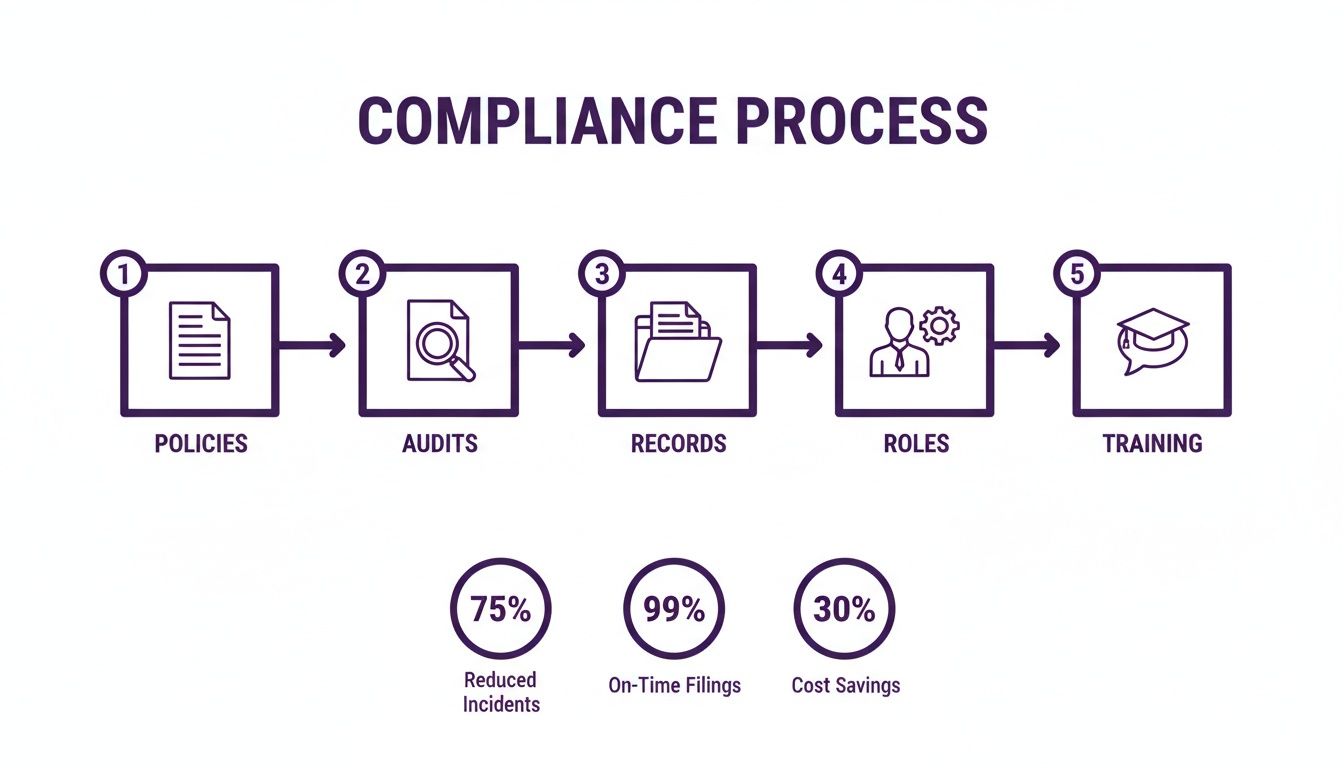
This shows how policies, audits, record-keeping, role clarity, and training all interconnect to create a continuous loop of compliant activity.
Stage 1: Writing Inclusive Job Descriptions
Compliance starts long before you ever speak to a candidate. The language you use in your job adverts sets the tone and can either attract a diverse pool of talent or unintentionally shut the door on qualified people.
Your goal is simple: describe the role, not the ideal person. Focus on the essential skills and responsibilities rather than vague personality traits or unnecessary experience levels that can bake bias right into your process.
- Ditch the Gendered Language: Swap out terms like "rockstar" or "ninja" for neutral descriptions like "skilled professional" or "expert."
- Specify Only Essential Qualifications: Question every requirement. Does a candidate genuinely need 10 years of experience, or do they just need to prove specific competencies? Inflated requirements are known to discourage women and candidates from minority backgrounds from even applying.
- Add an Equal Opportunity Statement: This is a simple but powerful signal. Explicitly stating your commitment to diversity and inclusion tells everyone you're a fair and welcoming employer.
Stage 2: Standardising Applications and Interviews
Consistency is the absolute cornerstone of fair and compliant screening. Every single candidate should be evaluated against the same yardstick. This is how you start to strip away unconscious bias and ensure your hiring decisions are based purely on merit.
Standardisation also protects your organisation. It creates a clear, defensible record of why one person was chosen over another, demonstrating your process was objective and tied to job-related factors.
A standardised process is your best defence against accusations of discrimination. It provides tangible evidence that every applicant was given a fair and equal opportunity, based on a consistent set of questions and scoring criteria.
To make this happen, design a structured interview where every candidate for a role is asked the same core questions. These questions should be competency-based, designed to assess the skills needed for the job—not to gauge "cultural fit," which can often be a smokescreen for bias. You can get more insight on building a solid workflow by exploring the key hiring process steps for successful recruitment.
Stage 3: Managing Background Checks and Offers
Once you’ve identified your final candidate, the compliance focus shifts to data privacy and legal verification. Background checks, like criminal record (DBS) and right-to-work checks, must be conducted fairly and strictly in line with UK law.
It's crucial to handle this sensitive data with extreme care, adhering to GDPR principles at all times.
- Get Explicit Consent: Always secure a candidate's written permission before you run any background checks. No exceptions.
- Ensure Relevance: Only carry out checks that are genuinely necessary for the role. A financial background check makes sense for an accountant but is completely inappropriate for a graphic designer.
- Secure Your Data: All documents, from passports to DBS certificates, must be stored in a secure, access-controlled system. This prevents data breaches and ensures you're ready for any audit.
By weaving these practical steps into your day-to-day hiring, compliance stops being a theoretical headache. It becomes a powerful operational discipline that protects your business and builds your reputation as an employer of choice.
Before you start your next recruitment drive, it's a good idea to have a clear checklist. This helps ensure no compliance actions are missed as candidates move through the funnel.
Recruitment Compliance Checklist
Here’s a simple checklist to guide you through the main stages of the hiring process, ensuring you cover all the essential compliance actions from start to finish.
| Hiring Stage | Key Compliance Action | Why It Matters |
|---|---|---|
| Job Advert | Use inclusive, bias-free language. Include an Equal Opportunity statement. | Attracts a diverse talent pool and prevents discrimination claims from the outset. |
| Application Screening | Apply consistent, job-related criteria to all CVs. Redact personal data if possible. | Ensures fairness and objectivity, reducing the risk of unconscious bias influencing decisions. |
| Interviewing | Use a structured interview with standardised questions for all candidates. | Provides a consistent evaluation framework and makes hiring decisions legally defensible. |
| Background Checks | Obtain written consent. Conduct only relevant checks for the role. | Protects candidate privacy rights and ensures compliance with GDPR and employment law. |
| Offer & Contract | Ensure the offer letter and contract are legally sound and non-discriminatory. | Creates a clear, legally binding agreement and avoids future disputes over terms. |
| Data Handling | Securely store all candidate data and dispose of it according to GDPR timelines. | Prevents data breaches, protects your organisation from fines, and builds trust with candidates. |
Using a checklist like this turns compliance from a vague concept into a series of manageable, concrete actions. It empowers your team to hire confidently while protecting the business at every step.
How Technology Puts Your Compliance on Autopilot
For a lot of businesses, managing compliance feels like a constant, manual struggle. You're chasing paperwork, updating endless spreadsheets, and just hoping nothing important falls through the cracks. This reactive approach isn’t just inefficient; it’s a massive risk waiting to happen. The only way forward is to shift from manual effort to automated efficiency with modern HR tech.
An all-in-one platform, like an Applicant Tracking System (ATS), is what turns compliance from a string of error-prone tasks into a smooth, automated workflow. Think of it as a digital rulebook that’s built directly into your hiring process. It ensures the right steps are followed every single time, without anyone having to second-guess themselves.
This shift isn't just a nice-to-have. A recent study shows that 85% of UK and Ireland businesses expect their compliance strategies to change because of new laws like the EU AI Act. Yet, a huge hurdle remains: 64% say their outdated systems are a top challenge, fuelling the very manual errors that delay hires and invite risk. An integrated ATS tackles this head-on by weaving compliance into every single stage of recruitment.
Centralised Document Management for Audit Readiness
One of the biggest compliance headaches is documentation. When an auditor comes knocking—whether it’s for GDPR or a CQC inspection—you need to pull up the right records instantly. Manually digging through old emails, shared drives, and dusty filing cabinets is a recipe for disaster.
Technology solves this by creating a single, secure source of truth for every candidate. Every document, from their CV and application form to their right-to-work checks and signed offer letter, is stored in one central profile.
- Audit-Ready Trails: The system automatically logs every action, creating a complete, time-stamped audit trail that proves you followed a compliant process from start to finish.
- Access Control: You can set permissions to make sure only authorised staff can view sensitive information, bolstering your data security.
- Automated Retention: A modern ATS can automatically flag or delete candidate data based on GDPR retention policies, taking the guesswork and the risk out of data management.
Automated Checklists and Fairer Screening
Human error is one of the biggest threats to compliance. In a busy hiring process, it’s all too easy for someone to forget a crucial step, like getting explicit consent for a background check or asking a standardised set of interview questions. Automation removes this risk by building compliance right into your workflow.
An automated system doesn’t just suggest best practices; it enforces them. By making compliant actions the default, technology ensures consistency and fairness across every single hire, protecting your business from bias and legal challenges.
For example, you can set up automated onboarding checklists that require new hires to upload their right-to-work documents before they can move to the next stage. This ensures you never miss this critical legal step. In the same way, features that help standardise interview questions or anonymise CVs help to strip out unconscious bias, making sure decisions are based purely on merit. For a deeper dive, read our guide on how to automate your workflow using HR tech integrations.
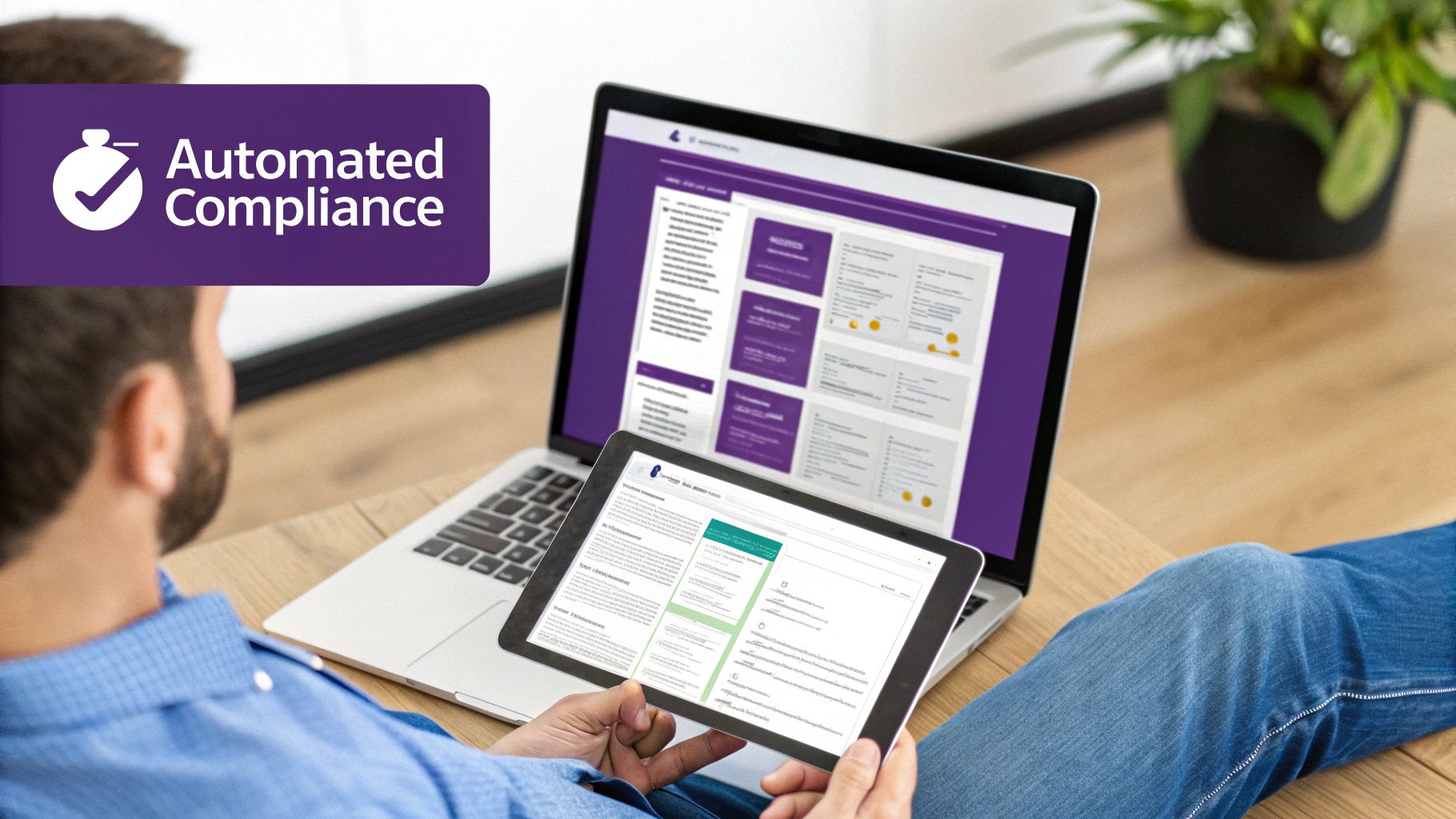
The image above from SeeMeHired shows how an all-in-one system brings compliance and efficiency together in a single dashboard, giving you a complete overview at a glance.
This kind of centralised view allows HR teams to manage everything in one place, from posting jobs and shortlisting candidates to scheduling interviews and collecting all the necessary documents.
From Manual Chaos to Automated Clarity
To really see the difference, just think about these before-and-after scenarios:
Before Technology: A hiring manager emails sensitive candidate documents to three different people. The onboarding checklist is a spreadsheet saved on a local drive, and nobody is quite sure if the new starter’s right-to-work check was ever completed. Getting ready for an audit means spending days manually pulling records from a dozen different places.
After Technology: All candidate documents are uploaded to a secure, centralised ATS profile with strict access controls. An automated onboarding workflow sends tasks directly to the new hire, and their progress is tracked in real-time on a central dashboard. When an audit is needed, a complete report can be generated in minutes.
By putting your compliance on autopilot, technology doesn’t just reduce risk—it frees up your team to focus on what really matters: finding and hiring the best people for the job.
Common Questions About Hiring Compliance
Knowing the theory behind compliance is one thing, but putting it into practice in the real world throws up a lot of questions. For most HR managers and small business owners, the real challenge is turning those big ideas into everyday actions.
This section tackles some of the most frequent questions we hear from people on the ground. Think of it as your practical troubleshooting guide, with clear, straightforward answers to help you navigate hiring compliance with a bit more confidence.
How Can Small Businesses Manage Compliance Without a Legal Team?
This is a massive concern for smaller businesses where resources are already stretched thin. The good news? You don't need a dedicated legal department to build a solid compliance foundation. It’s all about being smart, focused, and resourceful.
First off, focus on the absolute fundamentals. Don't try to boil the ocean by tackling every single regulation at once. Instead, build solid, basic policies for equal opportunities, data protection, and right-to-work checks. Nail these three areas and you’ve covered a huge chunk of your risk.
The goal for a small business isn't legal perfection; it's proactive risk reduction. By focusing on foundational policies and leveraging smart tools, you can achieve a high level of compliance without the overhead of an in-house legal team.
To make this happen, lean on trusted external resources and good technology.
- Use Authoritative Templates: Organisations like Acas (the Advisory, Conciliation and Arbitration Service) provide free, legally sound templates for essential HR policies. You can adapt these for your own business without reinventing the wheel.
- Leverage Technology: A modern Applicant Tracking System (ATS) is a game-changer here. Many have compliance features baked right into their workflows, like automated GDPR consent management and secure document storage. They act as a digital guardrail for your team.
By combining these strategies, you can create a robust system that handles the bulk of your compliance obligations efficiently.
What Is the Single Best First Step to Improve Hiring Compliance?
If you're feeling overwhelmed and don't know where to start, the most effective first step you can take is a simple self-audit of your existing hiring materials. It's a low-cost, high-impact action you can knock out in an afternoon, and it’s all about removing obvious risks from the very beginning of your process.
Start by grabbing your most recent job descriptions and your standard application form. Then, go through them with a critical eye, specifically looking for any language or questions that could be seen as discriminatory, even if it’s completely unintentional.
For example, keep an eye out for:
- Biased Language: Are you asking for a "digital native" (which can imply age discrimination) or a "strong lad" (blatant gender discrimination)?
- Unnecessary Requirements: Does the role really need a "clean driving licence" if it involves no driving at all? This could accidentally discriminate against candidates with certain disabilities.
- Inappropriate Questions: Is your application form asking for a candidate's date of birth or marital status? These questions are almost never justifiable and open you up to serious risk.
This quick review is like a health check. It helps you spot and fix the most glaring issues straight away, instantly strengthening your compliance before you even post your next job. It’s the simplest way to make a real improvement, right now.
How Often Should We Review Our Compliance Policies?
The world of employment law never stands still, so your policies can't afford to either. A good rule of thumb is to conduct a full review of all your hiring and HR policies at least annually. Make sure to schedule this in your calendar just like any other important business task, so it doesn't get pushed to the side.
However, an annual review is just the baseline. A truly proactive approach means you have to be more agile. You must also commit to reviewing specific policies immediately whenever there are significant changes in legislation or regulations that affect your business.
For instance, major updates to immigration rules affecting right-to-work checks or new government guidance on equality monitoring should trigger an instant review of those specific policies. Staying informed through resources like the government's official employment law updates or HR publications is crucial. This dual approach—a scheduled annual check-up plus responsive, immediate updates—is what keeps your framework current and effective.
Does Using HR Software Guarantee We Are Compliant?
This is a critical, and common, misconception. While using HR software like an Applicant Tracking System is an incredibly powerful way to support your compliance efforts, it does not automatically make you compliant. An ATS is an enabler, not a silver bullet.
Think of it like this: a state-of-the-art oven can help you bake a perfect cake, but it can't create the recipe for you or stop you from using the wrong ingredients. The oven simply follows the instructions it's given.
In the same way, an ATS is brilliant at enforcing the processes and policies you create. It can automate your GDPR data deletion rules, ensure every candidate gets the same application questions, and store right-to-work documents securely. But the ultimate responsibility for creating legally sound policies and using the tool correctly still rests firmly with you. You have to understand your obligations first and then configure the system to meet them.
Ready to stop chasing paperwork and start building a compliant, efficient hiring process? SeeMeHired provides an all-in-one platform with built-in tools to help you manage everything from inclusive job adverts to secure document storage. Discover how SeeMeHired can put your compliance on autopilot.
