HR Processes
UK Employee Policy Handbook Template

An employee policy handbook template isn't just a document; it's the foundation for a fair and clear workplace. Think of it as a pre-written, structured starting point for your company's most essential guide, covering everything from day-to-day conduct to legal compliance.
Listen to the podcast here:
Why a Staff Handbook Is Your First Line of Defence
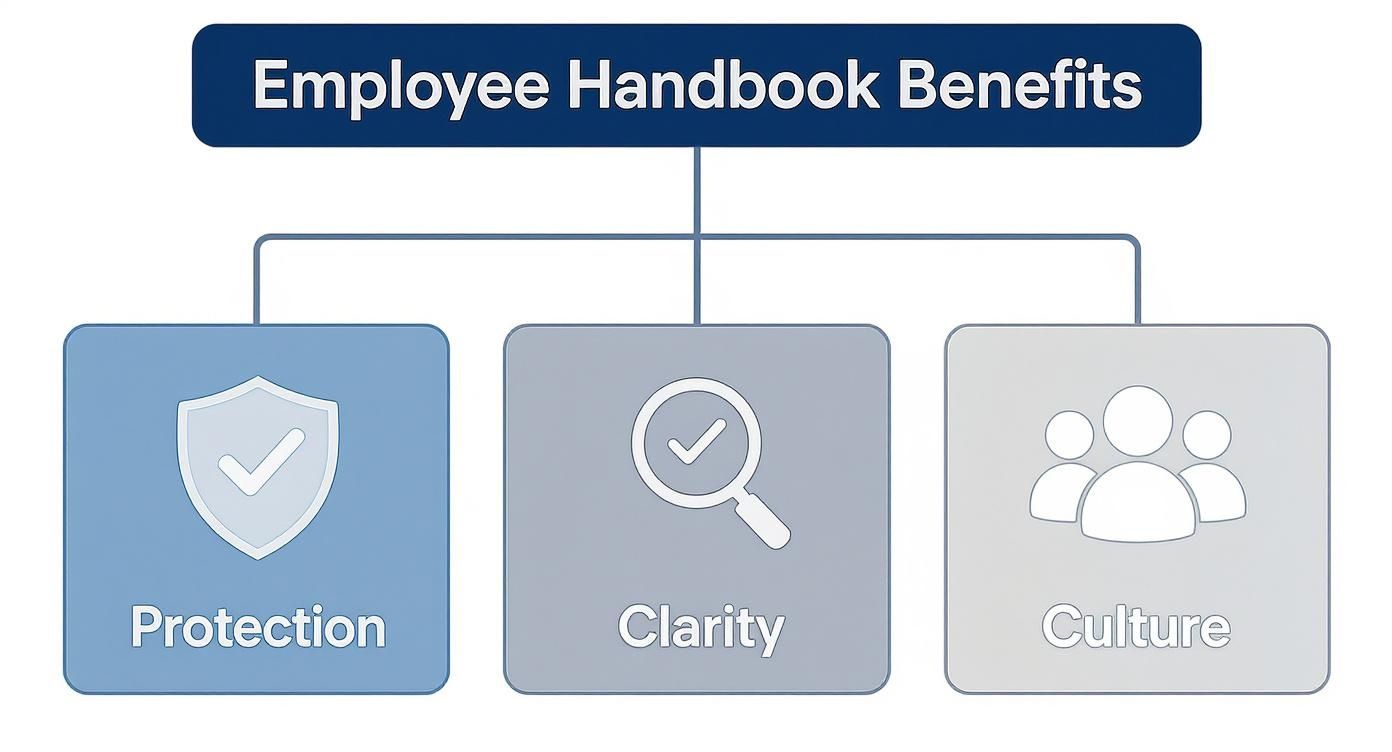
Too many business owners treat an employee handbook like a chore—just another box to tick for the HR department. But that perspective misses the point entirely. A well-crafted staff handbook is a powerful strategic asset. It's your first line of defence against misunderstandings, disputes, and messy legal challenges.
It’s the foundational agreement that sets the tone for the whole employment relationship. It takes you beyond vague verbal instructions and unwritten rules, creating a single source of truth that protects both the company and your people.
Establishing Operational Clarity From Day One
Without a formal handbook, you’re leaving things wide open to interpretation. New hires are left wondering how to book holidays, what the protocol is for calling in sick, or where the company stands on flexible working. This ambiguity often leads to inconsistent practices, with different managers making up their own rules and fostering a sense of unfairness.
A solid employee handbook cuts through all that confusion. It gives everyone clear, accessible answers to those everyday questions, empowering them to act with confidence.
- Defines Key Procedures: It clearly outlines how to do everything from requesting annual leave to using company equipment.
- Sets Performance Standards: It communicates what you expect when it comes to professional conduct, communication, and job performance.
- Onboards New Hires Effectively: It hands new starters a comprehensive guide to your company culture and operations right from their first day.
This kind of clarity gets everyone on the same page, frees up your managers from answering the same questions over and over, and lets your team focus on their actual work.
Mitigating Risk Under UK Employment Law
Let's be honest: the legal landscape for UK employers is complicated and always changing. A staff handbook is one of your most critical tools for proving compliance and heading off legal risks before they start. It's documented proof that you’ve communicated legally required policies to your staff. You can find more detail by reading our guide on the essentials of UK employment law compliance.
A documented policy, acknowledged by an employee, is far more defensible in an employment tribunal than a casual verbal agreement or an unwritten rule. It demonstrates that the business has acted fairly and transparently.
This proactive approach is essential for defending against claims of unfair dismissal, discrimination, or other grievances. And it's not just us saying it—the trend is clear. By 2025, it's projected that over 85% of UK businesses with 20 or more employees will have a formal handbook. That's a huge jump from just 65% in 2015. This shift highlights just how indispensable these documents have become in today's world of work.
Crafting Your Core Policies for UK Compliance
Alright, we’ve covered the ‘why’. Now it’s time to get into the ‘what’ – the actual substance of your employee handbook. This is where a generic template starts to become your company's rulebook, a practical guide that shapes day-to-day operations.
Putting together this core set of policies isn't just about filling in blanks. It’s about making conscious decisions that reflect your company's values while staying firmly on the right side of UK employment law. We'll start with the absolute non-negotiables before moving on to the policies that really define your workplace culture.
Legally Required Policies You Cannot Skip
Some policies aren't just 'a good idea' – they're mandated by UK law. Getting these wrong, or worse, leaving them out entirely, can expose your business to costly tribunal claims and serious legal trouble. Think of these as the structural pillars of your handbook; they have to be solid.
The government’s own website is a brilliant, direct resource for understanding exactly what’s expected of you as an employer.
This portal gives you direct guidance on the fundamentals like pay, contracts, and dismissals. It’s a clear signal of how important it is to get these things right from the very beginning.
Here are the absolute must-haves for any UK business:
- Disciplinary and Grievance Procedures: The law is crystal clear on this: you must tell employees how you handle disciplinary issues and grievances. Your policy needs to lay out the steps for an employee to raise a formal concern (a grievance) and the process you'll follow if their performance or conduct isn't up to scratch (disciplinary). Being unambiguous here is your number one defence against claims of unfair dismissal.
- Health and Safety Policy: If you have five or more employees, you are legally required to have this in writing. It needs to detail your commitment to a safe workplace, outline who is responsible for what, and explain the practical steps you take to keep everyone safe.
- Statutory Leave and Pay: Your handbook must clearly set out the entitlements for things like maternity, paternity, adoption, and shared parental leave. It also needs to cover the procedures for Statutory Sick Pay (SSP), including how and when an employee should report an absence.
Even if the rest of your handbook is non-contractual, these policies often form a legal agreement. Nailing them isn't optional.
Policies That Define Your Company Culture
Once the legal foundations are securely in place, you can start building the policies that give your handbook its personality. These are the sections that shout about your values, set behavioural expectations, and shape what it actually feels like to work for you.
This is your opportunity to move beyond mere compliance. A great handbook builds a positive, productive, and fair environment for everyone.
Consider adding these key cultural policies:
Code of Conduct
This is where you set the standard for professionalism and respect. It’s much more than a dress code; it should cover everything from communication styles and collaboration to basic ethical behaviour.
For example, you could include a clause like: "We expect all team members to communicate with respect, whether they're talking to colleagues, clients, or suppliers. Disparaging or aggressive language won't be tolerated on any channel, including email, Slack, or in-person meetings."
Remote and Flexible Working Policy
In today's working world, not having a clear policy on remote or hybrid work is a recipe for disaster. This section should detail who is eligible, what the expectations are for availability and communication, and any guidelines for home office setups or equipment. A lack of clarity here is a fast track to confusion and resentment.
Equal Opportunities and Diversity Policy
While this is closely tied to your legal duties under the Equality Act 2010, it's also a powerful statement about your company's character. It should affirm your absolute commitment to an inclusive environment that is free from any form of discrimination, harassment, or victimisation.
Key Takeaway: A strong equal opportunities policy does more than just list protected characteristics. It explains your proactive commitment to diversity and inclusion and provides a clear, confidential way for employees to report concerns without any fear of comeback.
Data Protection and Privacy
Let's be clear: handling employee data correctly is a massive legal responsibility. Your policy must explain what personal data you collect, why you need it, how you keep it secure, and for how long. Being transparent and compliant with data protection regulations is non-negotiable.
For a deeper dive into your responsibilities, particularly when hiring, check out our detailed guide on GDPR for UK recruitment teams.
Essential vs Recommended Policies for Your UK Handbook
To help you get your priorities straight, it's useful to see the legally required policies side-by-side with those that are simply best practice. While you should aim to have all of them eventually, this table helps you focus on the most critical elements first.
| Policy Category | Legally Required (UK) | Highly Recommended | Key Considerations |
|---|---|---|---|
| Grievance & Disciplinary | Yes | N/A | Must follow the ACAS Code of Practice to avoid hefty tribunal penalties. |
| Health & Safety | Yes (for 5+ employees) | N/A | Needs to be specific to your work environment and reviewed regularly. |
| Equal Opportunities | Yes | N/A | Demonstrates clear compliance with the Equality Act 2010. |
| Data Protection (GDPR) | Yes | N/A | Must outline how you handle all employee data in a lawful manner. |
| Code of Conduct | No | Yes | Sets clear behavioural expectations and defines what professionalism means at your company. |
| Remote/Flexible Working | No | Yes | Manages expectations for modern work arrangements. Absolutely crucial for retention. |
| Sickness Absence Reporting | No | Yes | Provides a clear, fair process for reporting illness and managing SSP. |
| IT & Communications | No | Yes | Governs the acceptable use of company systems, email, and social media. |
By methodically working through these core areas, your employee policy handbook template will transform into a practical, compliant, and culturally relevant guide. It will become a genuine cornerstone of your business operations.
Tailoring Your Handbook for Different Industries
A generic employee policy handbook template is a brilliant starting point, but it's not the finish line. To make your handbook a genuinely useful tool, you need to adapt it to the unique landscape of your industry. After all, the daily realities of a healthcare worker are worlds apart from those of a software developer or a hotel concierge.
Failing to address these specific needs turns your handbook into a document that feels disconnected from your team's actual work. It's the difference between a guide that gathers dust and one that employees actively use to navigate their roles with confidence. Let's break down how to refine your template for three very different sectors.

Custom Policies for Healthcare Organisations
In healthcare, the stakes are exceptionally high. Compliance isn't just about good business practice; it’s about patient safety, data security, and maintaining professional standards under intense scrutiny. Your handbook must reflect this gravity.
A crucial area is patient confidentiality. While a standard template might have a general privacy clause, a healthcare handbook needs a robust policy that explicitly references GDPR and specific healthcare data regulations. This section should detail the sanctity of patient information, providing clear examples of what constitutes a breach—from a casual conversation to the improper disposal of documents.
Another key area is professional conduct and boundaries. Healthcare professionals often build close relationships with patients, so your policy must clearly define the line between compassionate care and inappropriate familiarity. This includes guidelines on accepting gifts, social media connections with patients, and maintaining a professional demeanour at all times.
You absolutely must include policies on:
- Infection Control: Detail mandatory hygiene practices, the proper use of Personal Protective Equipment (PPE), and procedures for reporting exposure to infectious diseases.
- Clinical Governance: Outline the processes for maintaining and improving the quality of patient care, including incident reporting and clinical audits.
- Safeguarding Vulnerable Adults and Children: This policy must be crystal clear, providing step-by-step instructions for reporting any concerns about patient abuse or neglect.
Your healthcare handbook is a critical tool for risk management. A well-defined policy on clinical procedures or safeguarding can be your strongest defence in an investigation or claim, proving you have established and communicated clear standards of care.
For those in the sector, staying on top of regulatory demands is a constant challenge. To ensure your hiring practices align with these high standards from the get-go, you can learn more about CQC recruitment requirements in our healthcare hiring guide.
Adapting Your Handbook for Hospitality
The hospitality industry operates on a unique rhythm of shift work, direct customer interaction, and specific financial practices like tipping. Your handbook has to provide clear guidance on these day-to-day operational realities to prevent confusion and ensure fairness.
A Tipping and Gratuities Policy is non-negotiable. Whether you operate a tronc system or have another method for distributing tips, the process must be documented with total transparency. This policy should explain how tips are collected, who is eligible to receive them, and the schedule for distribution, leaving no room for ambiguity or disputes.
The nature of shift work also requires specific policies. A standard attendance policy just won't cut it. You need clauses that cover:
- Shift Swapping Procedures: Outline the official process for employees who want to swap shifts, including who needs to approve it and how far in advance requests must be made.
- Absence Reporting for Shift Workers: Specify the exact procedure for calling in sick for an early morning or late-night shift—who to contact and by when.
- Uniform and Appearance Standards: As a customer-facing industry, clear guidelines on dress and personal grooming are essential for maintaining your brand image.
Finally, a Customer Service Protocol section is vital. This should go beyond a simple "be nice to customers" statement. Provide specific examples of how to handle common situations, like dealing with a complaint, managing a difficult guest, or escalating an issue to a manager. This empowers your team to handle challenging interactions professionally and consistently.
Essential Policies for Tech Companies
The tech sector is all about rapid innovation, flexible working arrangements, and a heavy reliance on intellectual property. Your employee policy handbook must be adapted to protect your company's most valuable assets while fostering a culture that attracts and retains top talent.
An Intellectual Property (IP) and Proprietary Information policy is paramount. This clause must clearly state that any work, code, ideas, or inventions created by an employee using company time or resources belong to the company. It should also reinforce the importance of not sharing trade secrets or confidential project details outside the organisation.
Given how common modern working styles are, a detailed Flexible and Remote Working Policy is essential. This needs to cover:
- Core Working Hours: Define any specific hours when employees must be online and available for collaboration.
- Data Security for Remote Work: Provide strict guidelines on using secure Wi-Fi networks, company-issued equipment, and VPNs to protect sensitive company and client data.
- Equipment and Expenses: Clarify what equipment the company will provide and outline the policy for reimbursing home office expenses.
By tailoring your handbook, you create a document that speaks directly to your team's experience, making it a relevant and respected resource for your entire organisation.
Right, you've put in the hard work and your new employee handbook is ready to go. But before you pat yourself on the back, remember this: a brilliant handbook is only as good as its rollout.
Getting this part wrong can undermine everything you’ve just done. A clumsy launch makes it feel like just another corporate document to be skimmed and forgotten. You need a plan to introduce it properly and weave it into your company's culture.

The trick is to frame it as a positive step forward. This isn't about laying down the law; it's about giving everyone more clarity, fairness, and transparency. A thoughtful communication strategy is key to getting your team on board.
Communicating the Launch to Your Team
Whatever you do, don't just attach it to an email with a generic "please read" message. That’s a guaranteed way to ensure it gets ignored. You need a more deliberate, positive, and multi-channel approach to get this right.
First, schedule a team meeting (or a few smaller ones) specifically to walk everyone through the new handbook. This is your chance to explain the why behind it.
Here’s how to lead that conversation:
- Frame it around clarity and fairness: Explain that the handbook’s main purpose is to make sure everyone is treated consistently and knows the score on everything from booking holidays to requesting flexible working arrangements.
- Position it as a helpful resource: Make it clear this document is there to empower your people with information, not to catch them out.
- Open the floor for questions: A live Q&A session is non-negotiable. It shows you're open to feedback and helps you tackle any worries head-on, building trust from the start.
After the meeting, send a follow-up email with a link to the digital handbook and a quick summary of what you discussed. Keep reinforcing the message that this is a living document created to support them.
Integrating the Handbook into Onboarding
Nowhere is the handbook more important than during onboarding. For a new hire, this document is their roadmap. It helps them get to grips with your company culture and how things actually work from day one, setting the stage for a great working relationship.
Don't just hand it over and expect them to read it. Your onboarding process needs to have specific moments built in to guide them through it. For more on creating a welcoming experience, check out our guide on how to create a standout onboarding process.
A new hire's first week is your golden opportunity to set expectations. By making the handbook a central part of their induction, you ensure they start off with a solid understanding of your company's standards and values.
A simple checklist is a brilliant way to make sure every new starter gets the same thorough introduction to the handbook. It keeps the process consistent and gives you a clear record.
New Hire Handbook Onboarding Checklist
This simple checklist helps managers and HR ensure every new team member has received, reviewed, and acknowledged the company handbook.
| Task | Completed (Checkbox) | Notes/Date |
|---|---|---|
| Handbook provided to new hire (digital) | ☐ | |
| Dedicated time scheduled to review key policies | ☐ | |
| Explained process for asking questions | ☐ | |
| Digital acknowledgement of receipt signed | ☐ |
This creates an important paper trail and confirms that everyone has been given the information they need to succeed.
Digital Storage and Version Control
Let's be honest, a printed handbook in a dusty binder is a thing of the past. In a modern business, your handbook needs to be a living, digital document that’s easy for everyone to access, whether they’re at a desk or working from home.
Storing it in a central, cloud-based spot is essential. This could be your company intranet, a shared drive, or a platform like SeeMeHired. The key is ensuring everyone is always looking at the most up-to-date version.
Here are a few best practices for managing it digitally:
- Use clear version control: Name your files logically (e.g., EmployeeHandbook_V2.1_Jan2024). This simple step stops old versions from causing confusion.
- Track acknowledgements digitally: Use e-signature tools or your HR system to get employees to confirm they’ve received and read the handbook. This creates a vital digital paper trail for compliance.
- Communicate all updates: When you change a policy, don’t just quietly swap the file. Send out a company-wide message explaining what’s changed and why.
When you roll out your handbook with care and manage it as a dynamic digital resource, it stops being a static document and becomes a true cornerstone of your company's culture and operations.
Keeping Your Handbook Compliant and Up to Date
Putting together your employee handbook is a massive milestone, but the work doesn't stop there. Think of it less as a finished product and more as a living document. UK employment law is constantly evolving, and a handbook that was perfectly compliant last year could easily become a liability this year.
An out-of-date policy can cause just as many headaches as having no policy at all. It opens the door to confusion, inconsistent practices, and leaves your business exposed if a dispute ever arises. The trick is to get into a proactive rhythm of reviewing it, rather than waiting for a problem to force your hand.
Establishing a Regular Review Cadence
As a bare minimum, you should block out time to do a full, comprehensive review of your entire employee policy handbook at least once a year. This annual check-in is your chance to catch any subtle shifts in legislation and make sure your policies still line up with what the business is trying to achieve.
That said, some events should ring the alarm bells for an immediate review, no matter where you are in your annual cycle.
- New Government Legislation: Big changes, like new rules around flexible working or updates to statutory pay rates, need your immediate attention.
- Internal Policy Shifts: If you’re rolling out a new remote working model or overhauling your performance review process, the handbook must be updated to match.
- Post-Incident Reflection: After dealing with a serious HR issue or grievance, it’s always a good idea to look back at the relevant policy. Could it be clearer? Could it help prevent a similar situation in the future?
Staying Informed on Legal Changes
You don't need to be a lawyer, but you do need to know where to find trustworthy information. One of the best resources in the UK is ACAS (the Advisory, Conciliation and Arbitration Service). They offer impartial, up-to-date guidance on employment rights and best practices, and it’s a great place to start.
Staying current isn't just about ticking a legal box; it’s about maintaining trust. When your team sees you're on the ball with keeping policies fair and lawful, it reinforces their confidence in the company as a whole.
Keeping up with legal developments is a fundamental part of good HR. For a wider look at your responsibilities, our guide on recruitment compliance in the UK is an essential legal playbook and covers a lot of the core principles you need to know.
Communicating Updates to Your Team
Right, so you’ve made some changes. Now what? Clear communication is everything. Simply swapping out the old file for a new one and hoping everyone reads it is a recipe for disaster. This kind of approach can breed mistrust and lead to people following outdated rules.
Instead, be transparent. Send out a company-wide email or message that clearly explains what has changed and, just as importantly, why it has changed. For major updates, it might even be worth holding a quick team meeting to walk everyone through the new policy and answer questions on the spot.
Finally, always get employees to acknowledge they've received the updated handbook. A simple digital signature creates a clear record that everyone has been brought up to speed. This ensures your handbook remains a powerful tool for protecting your business and, most importantly, supporting your team.
Your Top Employee Handbook Questions, Answered
Even with the best template in the world, you’re bound to have questions. Getting the details right on legal nuances and best practices can feel like a minefield, so let's walk through the most common queries we hear from business owners and HR managers.
Is an Employee Handbook Legally Binding in the UK?
This is a really common question, and the answer is a crucial one: not entirely. Think of it this way – certain policies that spell out specific terms and conditions, like pay rates or working hours, can be considered contractual if you word them that way.
However, the vast majority of your handbook—things like your code of conduct or disciplinary procedures—should be explicitly non-contractual.
The most important thing you can do is include a crystal-clear disclaimer stating that the handbook does not form part of the contract of employment. This gives you the wiggle room you need to update policies as your business and the law change, without having to renegotiate every single employee's contract. Seriously, get a legal professional to check this wording for you.
This separation is what protects your business. It lets you stay agile while keeping the core employment terms stable – a perfect balance of providing clear guidance and maintaining operational flexibility.
How Often Should We Update Our Handbook?
As a rule of thumb, you should plan a full, comprehensive review at least once a year. This keeps your policies in sync with your company culture and the reality of how your business operates today.
But some things just can't wait for the annual review. You'll want to make immediate updates when:
- UK employment law changes significantly. Think of new regulations around flexible working or updates to statutory pay.
- Your business makes a major internal shift. For example, moving to a permanent hybrid work model or rolling out new company-wide technology.
- You've dealt with a significant HR incident. A review can often highlight a policy that needs clarification to prevent similar issues from cropping up again.
Do Employees Need to Acknowledge Every Update?
Yes, absolutely. This is a non-negotiable part of good governance. When you issue a revised handbook, simply making it available on the company intranet isn't enough. You need to actively send the new version to all staff and get a signed acknowledgement back.
Whether you do this digitally or with a physical form, the goal is the same: to have a clear record that every employee has received and had the chance to read the updated policies. That little piece of paper (or digital signature) is what makes your policies enforceable and adds a vital layer of legal protection for the business.
Can a Small Business Just Skip Having a Handbook?
It might seem like an easy way to save some time, but it’s an incredibly risky shortcut to take. While there’s no single law that says "you must have a handbook," UK law does require all employers to give employees a written statement of their key employment particulars.
On top of that, you are legally required to have written policies for critical areas like disciplinary and grievance procedures. A well-crafted employee policy handbook template is simply the most efficient, reliable way to tick all these legal boxes, ensure your processes are fair, and protect your business as you grow. It’s a foundational layer of defence you really can't afford to be without.
Ready to streamline your entire hiring process, from attracting candidates to onboarding them with clear, compliant policies? SeeMeHired offers an all-in-one platform to manage recruitment, compliance, and new-hire documentation effortlessly. https://seemehired.com