Industry Trends
How to Improve Candidate Experience A Recruiter's Playbook
Getting your candidate experience right boils down to one simple thing: treating applicants with respect. It’s about clear communication and creating a hiring process that’s both efficient and transparent. When you nail this, hiring stops being a purely transactional function and becomes a powerful way to build your brand.
Listen to the podcast here:
Why Your Candidate Experience Defines Your Brand
In today's competitive UK market, a poor candidate experience isn't just a missed opportunity—it’s a direct threat to your employer brand. The days when companies held all the cards are long gone. Candidates now behave like consumers, meticulously researching your organisation, reading reviews on Glassdoor, and sharing their experiences with their networks.
Every single interaction, from the first time they see your job advert to the final decision, shapes their perception of your company. A disorganised or disrespectful process makes them think your internal culture is just as chaotic, pushing top talent away before you’ve even had a chance to speak with them. And trust me, this has a real, measurable impact on your business.
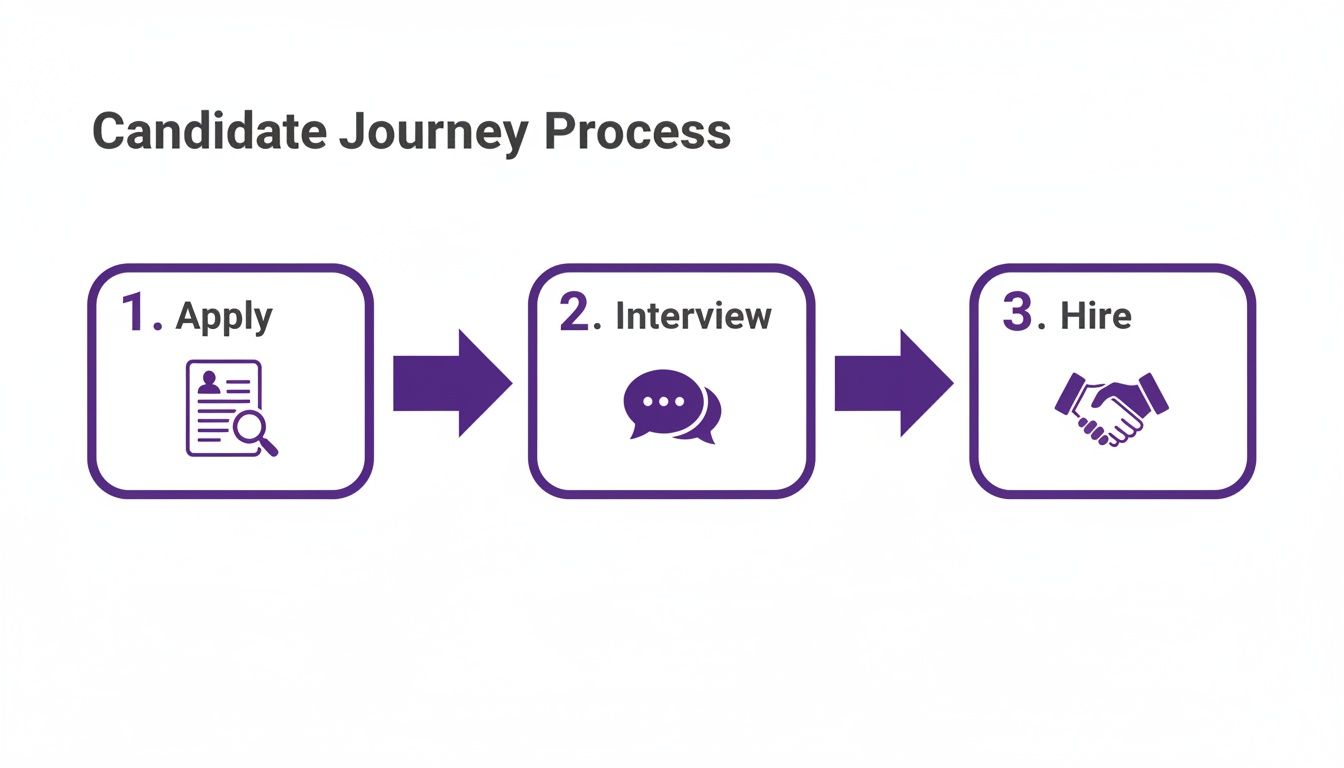
Each stage of the journey is a critical touchpoint where you can either delight or disappoint a potential new hire. Getting it wrong has consequences.
The Real Cost of a Poor Process
Neglecting the candidate journey creates problems that go far beyond a few negative reviews. It directly hits your bottom line and your ability to attract great people in the future.
Think about these knock-on effects:
- Higher Talent Acquisition Costs: If your reputation takes a hit, you’ll have to spend more on advertising and sourcing just to get the same calibre of applicants through the door.
- Lower Offer Acceptance Rates: A frustrating process makes even the best offer feel less appealing. Candidates who feel undervalued are far more likely to accept a competing offer from a company that treated them better.
- Damaged Consumer Brand: Remember, every candidate is also a potential customer. A bad hiring experience can easily sour their opinion of your products or services for good.
The data doesn't lie: a positive journey directly influences hiring outcomes. Research shows that 66% of job applicants accepted an offer because of a good candidate experience, while 26% rejected offers due to poor communication or unclear expectations.
Mapping the Journey for Success
To genuinely improve your candidate experience, you have to look at the entire hiring process through their eyes. This guide is your roadmap for optimising every critical stage. We’ll cover everything from crafting that initial job post and simplifying applications to running better interviews and onboarding new hires smoothly.
By focusing on these touchpoints, you can build a system that not only attracts but also retains the best people. In the end, investing in a great candidate experience is one of the smartest things you can do to strengthen your employer brand in a tough market.
Crafting Your First Impression: The Job Post and Application
Think of your hiring process as a series of conversations. The very first one—that digital handshake—starts the moment a potential candidate lays eyes on your job post. This isn't just an advert; it’s the first real glimpse they get into who you are as a company. It sets the tone for everything that follows.
Get it wrong, and you've already lost them. A vague, jargon-stuffed description doesn't just confuse people; it screams disorganisation. But get it right, and you’ll attract exactly the right kind of talent by painting an honest picture of the role and what your company truly values. This is your chance to make them want to apply.
Writing Job Descriptions That Attract and Inform
Before you can even think about improving the candidate experience, you need to attract the right people. That means ditching the dusty, generic templates and writing descriptions that speak directly to the person you actually want to hire.
Here’s how you can instantly make your job posts more compelling:
- Ditch the jargon and use inclusive language. Avoid corporate clichés or gendered terms that can unintentionally put off brilliant candidates. There are plenty of online tools that can scan your text for exclusionary language.
- Clearly define the role’s purpose. Instead of a laundry list of tasks, group responsibilities into key themes like "Client Relationship Management" or "Data Analysis and Reporting." This helps people grasp the core of the job quickly.
- Be upfront about compensation. This is a huge one. Including a salary range is a massive sign of respect for a candidate's time. It helps filter out those whose expectations don't match and brings in those who see a genuine opportunity.
- Show off your culture. What makes your company a great place to work? A quick note about your values, work environment, or unique benefits helps candidates see if they'll feel at home.
Writing a standout job description is a real skill, but nailing it will drastically improve the quality of your applicants. For a more detailed guide, check out our post on the 8 steps to write a standout job description.
Killing the Clunky Application Process
So, you’ve written a killer job post that’s got the perfect candidate hooked. Great! Now, don’t lose them at the next hurdle: the application form. This is where so many companies drop the ball. A long, complicated, or mobile-unfriendly application is one of the biggest turn-offs in the entire hiring process.
Today's candidates expect a smooth, simple experience—the kind they get from their favourite apps. If applying for a job feels like doing their taxes, they'll just click away. Top talent knows their value, and they won’t jump through endless hoops for a company that doesn’t seem to value their time from the get-go.
To show how big of an impact this can have, let’s look at a quick before-and-after of your application process.
Rethinking Your Application Process: Before and After
| Stage | Traditional Process (High Friction) | Optimised Process (Low Friction) | Impact on Candidate Experience |
|---|---|---|---|
| Initial Contact | Long, multi-page form. Requires manual entry of CV details. Not mobile-friendly. | Simple, one-page form. CV parsing or LinkedIn integration. Fully mobile-responsive. | Positive. Candidates feel their time is valued, reducing frustration and drop-off. |
| Questions Asked | Asks for irrelevant or redundant information ("Why do you want this job?" after a cover letter). | Only asks essential screening questions directly related to the role's requirements. | Respectful. Shows the company is efficient and focused on what truly matters for the role. |
| Time to Complete | Takes 20+ minutes. Candidates often have to create an account and password. | Takes less than 5 minutes. No login or password required for initial application. | Efficient. Increases completion rates significantly, capturing more high-quality talent. |
As you can see, a few smart changes can transform a frustrating chore into a positive first step.
This isn't just our opinion. Data from JobTrain’s Candidate Insights Market Report reveals that application completion rates drop by approximately 50% when forms take longer than 15 minutes to complete. This just hammers home how critical a streamlined process really is. You can learn more about what UK jobseekers expect by reading the full report.
The solution is to be ruthless in simplifying. Every single field on your application form should earn its place. If you ask a candidate to upload their CV, for goodness' sake, don't then make them manually type in their entire work history. That kind of redundancy is a major source of frustration and a top reason for abandonment.
This is exactly where a modern Applicant Tracking System (ATS) like SeeMeHired comes in. It’s built to get rid of these pain points, allowing for simple, mobile-first applications that people can finish in minutes, from any device. By integrating with platforms like LinkedIn, it can pre-fill information and cut out the repetitive data entry, turning a potential deal-breaker into a seamless first impression.
Mastering Communication During the Screening Process
Once a candidate hits 'submit' on their application, the clock starts ticking. That period between application and the first real human interaction is often a black hole of silence—a place where enthusiasm dies and top talent gets poached by more responsive competitors. Honestly, this screening stage is where so many companies drop the ball on communication, and it’s one of the quickest ways to damage your employer brand.
Poor communication is more than just an inconvenience; it feels like a sign of disrespect. When a candidate takes the time to apply, they deserve the courtesy of being kept in the loop. Even if you're drowning in hundreds of applications, silence is never the answer. A lack of updates creates anxiety and makes applicants feel like just another number, which is a terrible first impression to make.
The good news is that fixing this doesn't require a huge budget or a massive team. All it takes is a clear strategy and the right tools.
Building a Proactive Communication Strategy
A proactive approach means you control the narrative from the get-go. Instead of waiting for candidates to chase you for an update, you provide information before they even have to ask. This immediately builds trust and shows you run an organised, respectful process.
Your strategy should cover three key touchpoints:
- Immediate Acknowledgement: The moment an application lands, an automated email should go out. This isn't just a simple confirmation; it’s your first chance to set expectations. Let them know their application is safely with you and provide a realistic timeline for when they can expect to hear back.
- Regular Status Updates: If your screening process takes a week or two, don't let that time pass in silence. A simple, automated weekly update can make all the difference. A short message like, "We're still reviewing applications for the [Job Title] role and will be in touch with next steps soon," is enough to keep candidates warm and engaged.
- A Clear Final Decision: Whether it's an invitation to interview or a rejection, every single applicant must receive a final decision. Ghosting candidates is the ultimate brand killer. It guarantees they’ll never apply again and will likely share their negative experience with their network.
A study cited by Recruiter.com found that 54% of candidates abandoned a job process due to poor communication. This isn't just a missed opportunity; it’s a significant leak in your talent pipeline that directly impacts your ability to hire effectively.
Using an ATS to Automate and Personalise
Managing communication for high-volume roles can feel impossible, which is where modern recruitment software becomes your best friend. An Applicant Tracking System (ATS) like SeeMeHired is designed to solve this exact problem. It lets you automate your communications without sacrificing that all-important personal touch.
With an ATS, you can create email templates for every stage of the process.
- Acknowledgement Template: Automatically sent the second an application is received.
- Update Template: Can be bulk-sent to all applicants in a specific stage with a single click.
- Rejection Template: Sent to candidates who aren't moving forward, ensuring no one is left hanging.
These templates can use personalisation tokens, like [Candidate Name] and [Job Title], so each message feels directed and respectful. This simple automation frees up your team from sending manual, repetitive emails, allowing them to focus on high-value interactions like conducting interviews and speaking with top prospects. The system ensures no one falls through the cracks, protecting your brand reputation and improving the candidate experience at scale.
Handling Rejection with Grace
The rejection email is one of the most critical yet overlooked pieces of communication in the entire hiring process. Too many companies send a cold, generic "thanks, but no thanks" message. This is a massive missed opportunity to build brand advocacy, even with the people you don't hire.
A thoughtful rejection shows respect for the effort a candidate put in. While you can't provide detailed, individual feedback to everyone at the initial screening stage, you can still be human. Acknowledge their interest, thank them for their time, and encourage them to apply for future roles that might be a better fit. You can learn more about how to structure these messages in our guide on how to write a job rejection email that actually works.
By mastering communication during screening, you turn a potential point of friction into a powerful brand-building exercise. You show every applicant—successful or not—that your organisation is professional, respectful, and values the people who show an interest in joining your team.
Running Interviews That Candidates Actually Enjoy
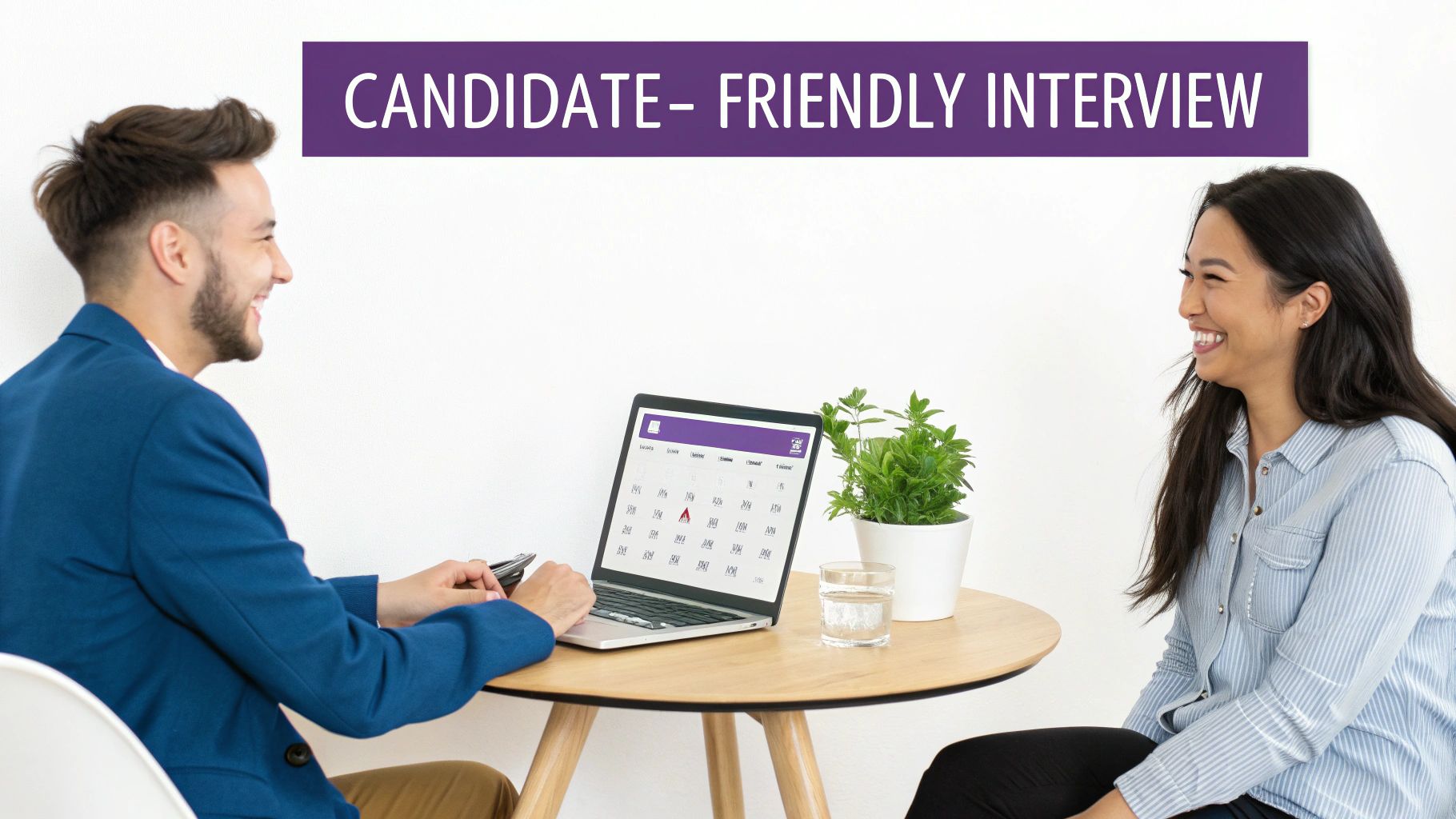
Let's be honest, the interview is usually the most memorable part of the whole hiring journey for a candidate. It’s a high-stakes, two-way conversation. They’re not just there to impress you—they’re also sizing you up, trying to figure out if your company is the right place for them.
All the fantastic work you've done up to this point can be completely undone by a disorganised, stressful, or biased interview. One bad experience can push top talent straight into the arms of a competitor.
But get it right, and the interview becomes your most powerful tool for winning over the best people. A respectful, structured, and genuinely engaging conversation is your prime opportunity to bring your company culture to life and show candidates what it’s really like to work with your team.
Setting the Stage for Success
A great interview experience doesn’t just happen. It begins long before the candidate walks through the door or joins the video call. Preparation is everything. It shows you respect their time and makes the conversation productive for everyone.
Start by smoothing out the logistics. Clunky scheduling is a classic friction point that just creates needless stress. Using an ATS like SeeMeHired with integrated calendar features is a game-changer here. Candidates can book a slot that works for them with a single click, completely killing off that frustrating back-and-forth email chain.
Next up, make sure your interview panel is ready to go. This means:
- Sharing the candidate’s CV in advance so everyone has proper context.
- Assigning specific focus areas to each interviewer to stop candidates from answering the same question three times.
- Agreeing on a consistent evaluation rubric to keep the assessment fair and unbiased.
When the panel is aligned and prepared, the whole conversation feels more professional and focused. That alone makes a huge difference to the candidate experience.
Training Hiring Managers to Be Brand Ambassadors
Your hiring managers are on the front line, representing your employer brand. An unprepared or biased interviewer can single-handedly create a negative impression that will stick. It's so important to train them not just on what to ask, but on how to have a conversation that makes candidates feel seen and valued.
Get them skilled up in behavioural interviewing techniques. Instead of asking those vague, hypothetical questions, teach them to ask for specific examples. For instance, swap out "How do you handle pressure?" for "Tell me about a time you had to complete a project on a tight deadline. How did you approach it?"
A poor interview interaction can be a total deal-breaker. Research shows that negative experiences during the interview stage caused 36% of candidates to decline job offers. This really drives home the direct link between interviewer quality and your ability to actually hire top talent.
It's also essential to train managers on unconscious bias. We all have biases, but simply acknowledging them is the first step towards a fairer process. Give them structured interview questions and scorecards to help them evaluate candidates on skills and competencies, not just "gut feelings" or shared backgrounds. For more practical advice, you can learn how to improve your interview process with 8 easy tweaks.
Structuring the Interview for a Positive Experience
Structure doesn't have to mean rigid. It's about creating a logical flow that makes the conversation feel productive and less stressful. A well-structured interview helps candidates perform at their best and gives you the info you need to make a solid decision.
Here’s a practical checklist you can use to guide your interviews:
- Start with a warm welcome and intros. Briefly introduce everyone in the room and their roles. Spend just a couple of minutes building rapport to ease any initial nerves.
- Set the agenda. Quickly outline how the interview will run. Something like, "We'll kick off with some questions about your experience, then we'll tell you more about the role and the team, and we’ll be sure to leave plenty of time for your questions at the end."
- Ask consistent, role-relevant questions. Stick to the script you prepared. This ensures you’re being fair and lets you compare candidates on a like-for-like basis.
- "Sell" the opportunity. Don't forget, it's a two-way street. Share what’s genuinely exciting about the role, the team, and the company’s direction.
- Leave plenty of time for their questions. A candidate's questions often tell you what's most important to them. Rushing this part sends a terrible message.
- Clearly explain the next steps. Always end the interview by outlining the timeline. Let them know when they can expect to hear from you, even if there might be a delay.
By running interviews that are organised, fair, and genuinely conversational, you transform a potentially daunting process into a positive brand interaction. This not only helps you find the best talent but makes them excited to say "yes" when the offer comes.
Closing the Loop: Offers, Feedback, and Onboarding
The final stages of your hiring process are the ultimate moment of truth. After all the interviews and assessments, this is where you either land your top choice or watch them walk away with a competing offer. Getting these last steps right isn't just a nice-to-have; it’s absolutely essential for cementing the positive impression you've worked so hard to build.
Every interaction at this stage—from giving feedback to presenting the offer and welcoming a new team member—leaves a lasting mark. A professional, respectful, and well-organised closing loop ensures every candidate, successful or not, leaves with a positive view of your company.
Delivering Constructive Feedback with Empathy
Let's start with the people you don't hire. It’s tempting to fire off a generic rejection email and move on, but that’s a huge missed opportunity. Providing thoughtful, constructive feedback can turn a disappointing moment into a powerful brand-building exercise.
When you take the time to offer real feedback, you show genuine respect for the candidate's effort. This simple act builds goodwill and makes it more likely they’ll apply again for a better-fitting role. In fact, according to TalentBoard, 74% of candidates who have a great experience will reapply or refer others, even if they were rejected.
Here’s how to give feedback that actually helps:
- Be Timely: Don’t keep people hanging for weeks after a final interview. A prompt response shows you run an efficient, respectful process.
- Keep it Specific (but Safe): Stick to skills and experience directly related to the job. For instance: "We decided to move forward with a candidate whose experience was more closely aligned with our specific B2B software sales cycle."
- Stay Positive: Always frame the feedback constructively. Acknowledge their strengths before explaining why it wasn't the right fit this time.
- Use an ATS for Consistency: An Applicant Tracking System like SeeMeHired helps manage this at scale. You can create templates to ensure every candidate gets a respectful and timely reply, maintaining a high standard even when you’re swamped.
A respectful rejection is one of the best brand protection strategies you can have. A candidate who feels valued, even when turned down, is far less likely to vent on Glassdoor and might even become a future customer.
Presenting an Unforgettable Job Offer
Getting a job offer should be a genuinely exciting moment, not a confusing or underwhelming one. How you present it speaks volumes about your company’s professionalism and how much you value your new hire. This isn't just admin; it's the final sales pitch.
Always start with a phone call. An email just feels too impersonal for such a big decision. A verbal offer from the hiring manager adds a human touch, lets you share your enthusiasm, and gives them a chance to ask questions on the spot.
Immediately after the call, send over a clear, professional offer letter. It should contain everything the candidate needs to make an informed decision, leaving zero room for doubt or confusion.
Key Elements for Your Offer Letter
- Role Title and Reporting Structure: Clearly state the job title and who their direct manager will be.
- Start Date and Location: Specify the exact start date and the primary work location (or your remote work policy).
- Compensation Breakdown: Detail the base salary, any bonus potential, and the pay frequency.
- Benefits Summary: Give a high-level overview of key benefits like private health insurance, pension contributions, and holiday allowance.
- Contingencies: Clearly list any conditions, such as passing a background check or satisfactory reference checks.
Using a platform like SeeMeHired means you can send official offer letters directly through the system, creating a seamless and trackable process from beginning to end.
Onboarding: The First Step as an Employee
The candidate experience doesn't just stop when the offer is accepted. It flows directly into the new hire experience, and a structured onboarding process is the crucial final piece of the puzzle. Great onboarding makes your new starter feel welcomed, prepared, and confident from day one.
A clunky, disorganised first week can quickly sour all that initial excitement and lead to new-hire remorse. Your goal is to make the transition from candidate to team member completely frictionless.
Create a checklist to guide that critical first week:
- Pre-Boarding Communication: A week before they start, send a welcome email with practical details—the first-day schedule, the dress code, and where to go.
- Day One Welcome: Make sure their equipment is set up and their desk is ready. A small welcome gift or a team lunch can make a huge difference.
- Structured Plan: Give them a clear schedule for the first week, including meetings with key team members and initial training sessions.
A system like SeeMeHired can support this transition by helping you manage new-hire checklists and document collection. This ensures all the compliance and paperwork are handled efficiently before day one, so you can focus on the human side of things—making your new hire feel like a valued part of the team from the moment they walk through the door.
Turning Feedback into a Better Hiring Process
A great candidate experience isn’t a static achievement you can just tick off a list. It's a living, breathing process of continuous improvement. If you want to really understand what’s working and what isn’t, you have to stop guessing and start listening.
Gathering meaningful feedback is the only way to turn your good intentions into a hiring process that consistently pulls in top talent. This means moving past your assumptions and collecting real data on how candidates actually perceive your process. The insights you get are gold, highlighting everything from a confusing job description to an interview process that drags on forever. Without this feedback loop, you're flying blind, likely repeating the same mistakes that make great candidates walk away.
Defining Your Key Performance Indicators
To know if you're succeeding, you've got to track the right metrics. These key performance indicators (KPIs) give you a clear, data-backed view of your hiring effectiveness and the quality of your candidate experience.
You don't need to track everything, just a few core metrics that tell a powerful story:
- Time-to-Hire: This is the total time from posting a job to getting an offer accepted. A lengthy time-to-hire can signal hold-ups that frustrate candidates and put you at risk of losing them to faster-moving competitors.
- Offer Acceptance Rate: This is a direct reflection of how compelling your entire process and final offer are. A low rate is a massive red flag, pointing to issues with your interviews, communication, or compensation package.
- Candidate Satisfaction (CSAT) Score: A simple post-interview survey asking candidates to rate their experience on a scale of 1-5 gives you immediate, actionable feedback. It’s one of the most direct ways to measure how your process is really perceived.
Gathering Actionable Feedback from Candidates
Data is most powerful when it’s fresh. Don't wait until the entire process is over to ask for opinions. Instead, set up simple feedback surveys at critical moments, like after the initial application and immediately following an interview. For more ideas on how to manage this, check out our guide on the 8 best practices for providing candidate feedback.
According to TalentBoard, 74% of candidates who have a great experience will reapply or refer others, even if they were rejected. This shows that a positive closing loop, built on feedback and respect, transforms every applicant into a potential brand advocate.
This is where your Applicant Tracking System becomes your best friend. A platform like SeeMeHired not only helps you send out automated surveys but also pulls all that data together into easy-to-read dashboards. This lets you spot trends and pinpoint the exact stages in your funnel that need a bit of work.
For example, if you see consistently low satisfaction scores after the technical interview stage, you know exactly where to focus your improvement efforts. By making feedback a core part of your strategy, you create a hiring process that learns, evolves, and gets better over time.
Key Metrics for Tracking Candidate Experience
To get a complete picture, it’s helpful to track a balanced set of metrics. This table breaks down the essentials, showing you what they measure and how an ATS can make tracking them almost effortless.
| Metric (KPI) | What It Measures | How to Track It (with an ATS) | Goal |
|---|---|---|---|
| Time-to-Hire | The efficiency of your entire hiring process, from job posting to offer acceptance. | Automatically calculate the days between a job opening and a candidate's acceptance. | Decrease over time without sacrificing quality. |
| Offer Acceptance Rate | The appeal of your job offers and the overall candidate experience. | Track the percentage of offers extended that are accepted. | Aim for 90% or higher. |
| Candidate Satisfaction (CSAT) | Direct feedback on how candidates perceive your hiring process. | Send automated surveys at key stages (e.g., post-application, post-interview). | Achieve an average score of 4.5/5 or higher. |
| Source of Hire | The effectiveness of your recruitment channels (job boards, referrals, etc.). | Use tracking links and source tags for each applicant to see where top talent comes from. | Identify and invest in high-performing channels. |
| Application Completion Rate | How user-friendly and accessible your application process is. | Monitor the percentage of candidates who start an application versus those who complete it. | Strive for 85% or higher. |
By keeping a close eye on these numbers, you're not just measuring—you're actively listening to what your candidates are telling you. This data-driven approach is the secret to building a hiring process that doesn't just fill roles, but builds a brilliant reputation.
Frequently Asked Questions
How Can a Small Business Improve Candidate Experience with Limited Resources?
If you’re working with a tight budget, the key is to focus on high-impact, low-cost areas. And honestly, the biggest one is communication.
Prioritise clear and consistent communication, even if it's automated. A simple acknowledgement for every single application shows you respect a candidate's time and effort. From there, simplify your application form by ruthlessly cutting any non-essential questions. Also, make sure your job descriptions are crystal clear and transparent about the role and company culture.
An efficient ATS can automate many of these tasks without a huge investment, which really helps level the playing field.
What Is the Single Most Important Factor in a Positive Candidate Experience?
While lots of things play a part, consistent and transparent communication is almost always cited as the most critical element. Candidates get that processes take time, but being left in the dark is what truly drives them mad.
Regular updates, even if it's just to say, "Hey, we're still working on it," show profound respect for their time and keep them engaged. This simple act can be the difference between a good and a bad experience.
How Often Should We Communicate with Candidates During the Hiring Process?
A good rule of thumb is to set expectations upfront and then either meet or beat them. At a minimum, acknowledge all applications within 24-48 hours. After an interview, give them a clear timeline for the next steps and, most importantly, stick to it.
Delays happen—we’re all human. But when they do, communicate them proactively. Try not to let more than a week pass without some form of contact, even if it's just a quick, automated update from your recruitment software.
Ready to transform your hiring process and deliver an exceptional candidate experience? SeeMeHired provides an all-in-one platform to automate communication, simplify applications, and build a stronger employer brand. Discover how it works at https://seemehired.com.