Clinical Lead
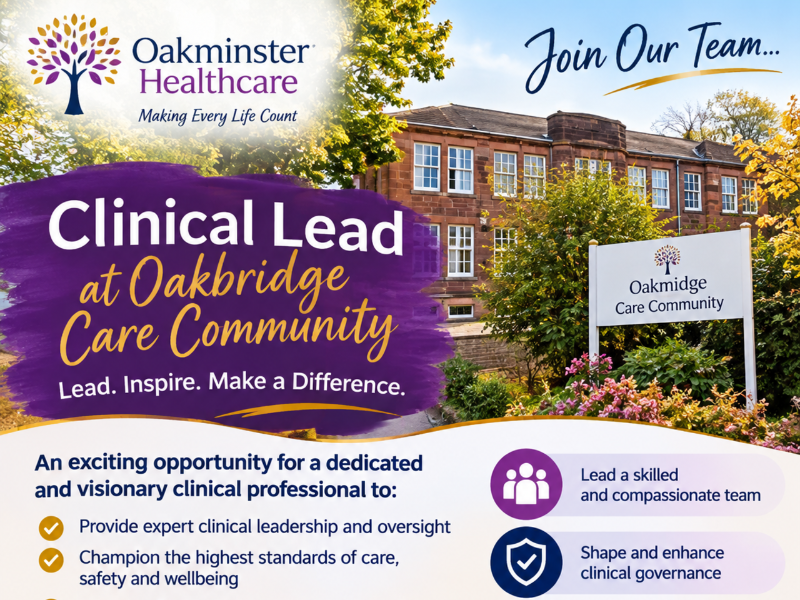


Clinical Lead
The Clinical Lead is the senior on-site clinical role model and expert resource for nursing and care colleagues. Working in partnership with the Home Manager, the postholder leads clinical oversight of people with increasingly complex health and social care needs; translates clinical governance into safe, effective practice; strengthens multidisciplinary relationships; and develops a confident, capable workforce. The role combines direct clinical practice with planned, protected leadership activity and is accountable for identifying concerns, acting promptly and demonstrating the impact of improvement on people’s lived experiences.
About this role
1 | Person-led clinical assessment and complex care
· Provide expert nursing assessment, clinical judgement and timely escalation within personal competence and agreed scope of practice; recognise when GP, emergency or specialist review is required.
· Oversee holistic support plans and risk assessments that reflect the person’s goals, communication, strengths, preferences, fluctuating capacity and meaningful daily routines, not merely their diagnoses.
· Coordinate oversight of complex needs including frailty, multimorbidity, dementia, acquired brain injury, neurological conditions, diabetes, seizures, respiratory illness, continence, nutrition, wounds, pain and palliative needs.
· Lead proactive case reviews for people experiencing recurrent falls, weight loss, pressure damage, infections, distress, hospital admissions or changing clinical presentation.
· Ensure clinical decisions are evaluated for their effect on comfort, function, independence, relationships, participation and quality of life.
2 | Clinical governance, assurance and improvement
· Apply Oakminster’s clinical governance and quality assurance arrangements; participate in the planned clinical audit programme and close the loop through ownership, action, re-checking and evidence of sustained improvement.
· Use Access Care & Clinical records, reports and clinical risk information to test whether care actually happens as planned; triangulate digital evidence with observations, conversations and outcomes.
· Critically review the quality and effectiveness of documentation: food and fluid intake, fortification and little-and-often support; repositioning and skin care; bowel monitoring; wound progression; observations; and response to identified triggers.
· Maintain a current picture of clinical performance, risks, overdue reviews, incident themes and actions; provide concise, exception-based updates to the Home Manager and Quality Improvement Director & Lead Nurse.
· Prepare for and respond to Care Inspectorate scrutiny, supporting evidence aligned with the Health and Social Care Standards, relevant quality frameworks and improvement plans.
3 | Anticipatory risk management and safeguarding
· Own and regularly review the service-level clinical risk picture, ensuring high and emerging risks have proportionate controls, named ownership, review dates and escalation pathways.
· Promote positive risk-taking and least-restrictive practice: balance avoidable harm with autonomy, relationships, participation and the person’s right to live a meaningful life.
· Lead or support incident reviews, clinical investigations, duty of candour processes and learning conversations as delegated; identify contributory system factors and verify improvement in practice.
· Ensure early identification and response to deterioration through baseline knowledge, appropriate observations, clinical assessment, escalation and structured SBAR communication; avoid relying on scores alone.
· Act immediately where people are at significant risk; follow adult support and protection procedures, professional obligations and internal escalation arrangements.
· Apply relevant Scottish law and policy, including Adults with Incapacity (Scotland) Act 2000, Adult Support and Protection (Scotland) Act 2007 and Mental Health (Care and Treatment) (Scotland) Act 2003 where applicable.
4 | Medicines, IPC and safe clinical interventions
· Provide oversight of safe medicines processes, including eMAR accuracy, administration competency, PRN effectiveness, omissions, covert administration safeguards, controlled drugs and timely pharmacy/GP review.
· Champion antimicrobial stewardship, infection prevention and control, outbreak readiness and safe use of invasive devices and clinical equipment.
· Ensure interventions such as wound management, catheter care, enteral feeding and diabetes monitoring are delivered by appropriately trained, assessed and supported colleagues within their roles.
· Investigate patterns such as recurrent infections, repeated PRN use, unexplained pain or changes in clinical indicators and ensure proportionate action.
5 | Leadership, supervision and workforce capability
· Provide visible clinical leadership across shifts; coach nurses, senior carers and care colleagues through observation, feedback, reflective discussion and supported clinical decision-making.
· Coordinate induction, supervised practice, competency assessment and development plans; assess transfer of learning into real care delivery, not attendance at training alone.
· Offer or coordinate structured clinical supervision, case reflection and peer learning; identify skill gaps and arrange specialist teaching or mentorship.
· Promote psychological safety, professional curiosity and speaking up, while addressing unsafe practice and poor performance promptly through appropriate management routes.
· Lead focused clinical huddles and nurse meetings with clear decisions, actions and follow-through; ensure robust, documented handovers.
6 | MDT partnership and anticipatory care
· Coordinate preparation for GP and multidisciplinary reviews: identify priority individuals, collate trends, clarify questions and ensure agreed actions are recorded and completed.
· Build working relationships with GPs, district nurses, tissue viability, continence, dietetics, pharmacy, speech and language therapy, physiotherapy, occupational therapy, mental health services, palliative care, social work and hospital teams.
· Support structured medicines reviews, specialist referrals, safe transfers and discharge planning; challenge avoidable delays and fragmentation constructively.
· Facilitate sensitive, timely anticipatory care planning and conversations about deterioration, treatment preferences and living and dying well, with the person and appropriate representatives.
· Use digital consultation and remote clinical input where appropriate without replacing essential face-to-face assessment.
7 | Communication, rights and experience
· Build trusted relationships with people living in the community, relatives and advocates; listen to concerns, explain changes in care and act on feedback.
· Ensure supported decision-making, appropriate capacity assessment and legal authority for interventions where required; respect privacy, dignity and confidentiality.
· Work with colleagues to demonstrate that safety enables rather than restricts everyday experiences, activities and social inclusion.
· Ensure records are accurate, timely, meaningful and secure, in line with NMC standards, UK GDPR, Data Protection Act 2018 and organisational policies.
8 | Operational partnership and professional accountability
· Work with the Home Manager to shape clinical priorities, service development, staffing capability and responses to changing acuity and dependency.
· Escalate staffing, equipment, environmental or competency risks that compromise safe clinical delivery; contribute clinical advice to contingency planning.
· Practise in accordance with the NMC Code, maintain registration and revalidation, recognise personal limitations and seek supervision or specialist input.
· Understand that the Clinical Lead does not replace the medical accountability of a person’s GP or other treating clinician; clinical responsibilities must remain within registration, competence, authorisation and local arrangements.
What success looks like· People report feeling heard, respected and supported to achieve what matters to them.
· Deterioration and clinical risk are recognised earlier, escalated effectively and reviewed for learning.
· Support plans and daily records demonstrate responsive, effective care rather than task completion alone.
· Falls, medication incidents, avoidable skin damage, distress and preventable admissions are understood through trends and improvement work, without creating perverse targets.
· Clinical actions are completed, checked for effectiveness and sustained; audit findings result in demonstrable change.
· Nursing and care colleagues can explain the rationale for interventions and show confidence, competence and professional curiosity.
Person specificationArea
Essential
Desirable
Registration & education
Current NMC registration as a Registered Nurse; evidence of CPD and commitment to revalidation.
Clinical experience
Essential: Substantial experience of complex nursing care, clinical assessment, medicines safety and escalation.
Preffered: Care home or community nursing experience; specialist clinical interests.
Leadership & governance
Ability to coach and supervise others; interpret audit and incident information; manage risk and improvement actions.
Experience leading clinical governance, investigations, competency frameworks or service change.
Communication & systems
Essential: Excellent documentation, collaborative communication, digital literacy and ability to use care management data.
Preffered: Experience with Access Care & Clinical, eMAR and structured improvement methods.
Values & judgement
Essential: Person-led, curious, compassionate, accountable; able to challenge unsafe care, balance positive risk and work under pressure.
Preffered: Evidence of innovation, teaching or multidisciplinary service development.
Governance and reviewThe postholder will work to the current Oakminster policies, delegated authority, applicable Scottish legislation and regulatory guidance. Responsibilities may be reasonably adjusted to reflect the needs of the service, professional scope and organisational developments. The role profile should be reviewed annually and when service requirements materially change.
Please note - successful candidates will be subject to an enhanced PVG check.
What you will need
Required criteria
- First Level Registered Nurse.
- Minimum 3 years post-registration in a relevant clinical/teaching role.
Desired criteria
- Five years in an active clinical/teaching role.
- Proven expertise and understanding of current best practices in at least two clinical areas relevant to older people’s care (e.g., tissue viability, nutrition, dementia care).
Skills needed for this job opportunity

Leading Teams

Managing Quality
Leadership

Nursing Qualification

